
K-beauty and lash architecture
Fermented Centella: four triterpenes, and the chromatogram that prices them
Madecassoside and asiaticoside are numbers. Fermentation can raise the aglycone share. Without before-and-after HPLC, cica on a jar is a leaf with a process word.
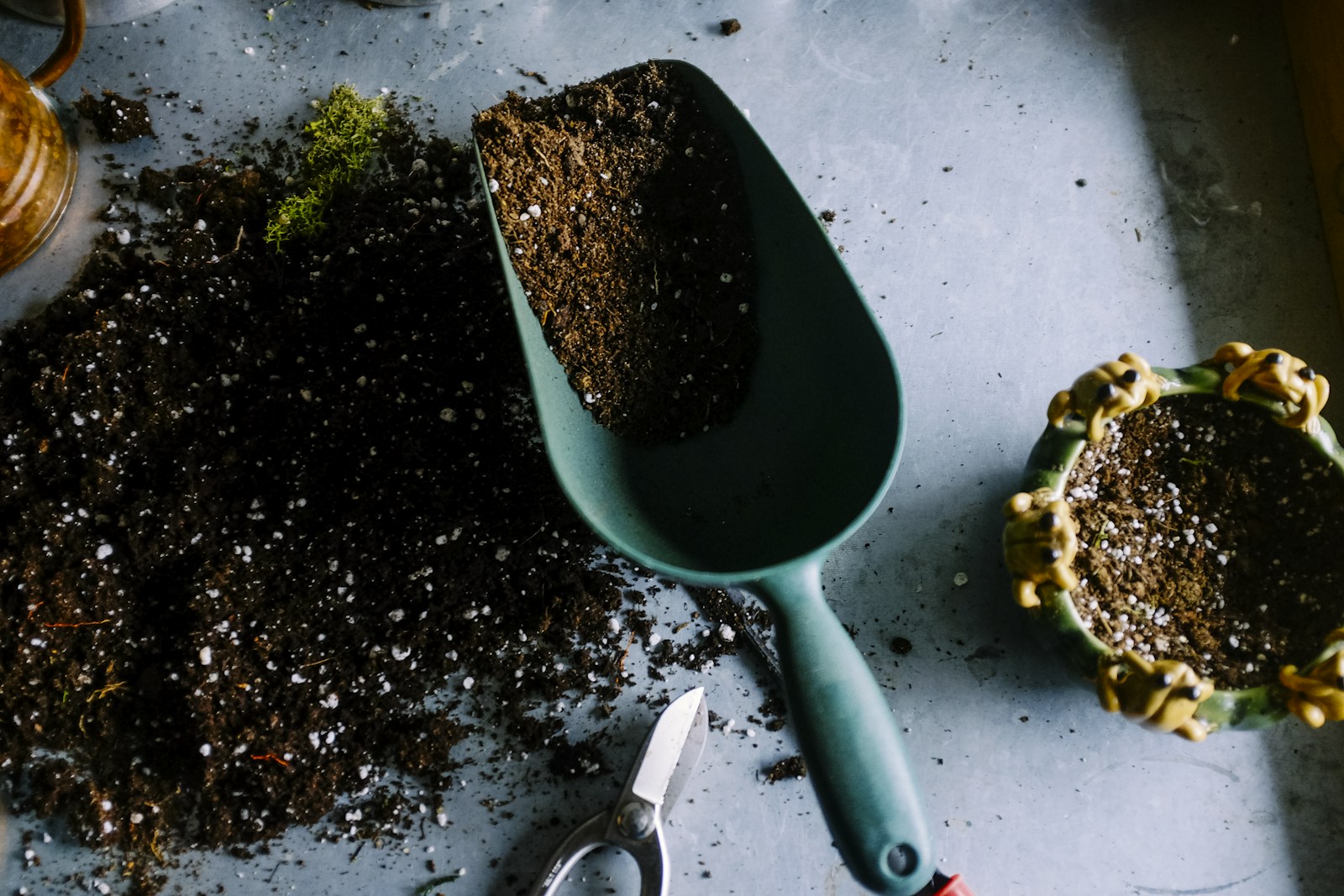
Soil, shears and a young pot on a workbench, Centella before anyone has assayed it. Image credit: Unsplash. Unsplash commercial licence.
On the bench: soil in a scoop, shears, a pot with something green just taking root, the honest start of a plant people will later print in a serif. Centella asiatica is that plant before it is a serum. Leaf, soil, harvest, then an extract whose value is four triterpenes, not the green. Asiaticoside and madecassoside are the glycosides. Asiatic acid and madecassic acid are the aglycones. Cica on a jar with no assay is the pot without knowing what is growing in it, sold at the price of the knowing.
Fermentation is the second generation of this raw material, and it is measurable, which is the compliment and the test. Microbes or their enzymes can clip the sugar off the glycoside. The aglycone is smaller and more lipophilic. It has a different chance of entering the stratum corneum than the large, polar glycoside, a chance you can discuss without the word activation. That is formulation chemistry. Yield rises only if someone shows the fractions afterward by HPLC. A process story without the chromatogram is a verb.
Four molecules, one leaf, very different invoices
Older pharmacological literature often means TECA, a titrated extract of Centella asiatica with a declared triterpene profile, the sort of declaration cosmetics sometimes lost on the way to a water phase. Cosmetics more often buy a water or glycol extract that INCI calls Centella Asiatica Extract. Both names are legal. One of them says how much madecassoside sits in a gram. The other says a plant was involved, which you already knew from the photograph of the pot.
Madecassoside is the molecule soothing serums like to lead with, and it is allowed to lead if the number is real. It is a glycoside, readily water-soluble, studied in cell models for inflammatory mediators and for an effect on collagen synthesis in fibroblast culture. That culture result does not, one for one, close a scar in a treatment room, and the gap between those two rooms is where claims go to get expensive. Asiaticoside follows a related pharmacology, related enough to confuse and distinct enough to separate on a column. The aglycones are the more interesting fraction for penetration. Cheap aqueous extracts often under-represent them, then describe the under-representation as a whole-plant philosophy.
HPLC, in routine work HPLC-UV or HPLC-MS, separates the four peaks. A certificate that says total triterpenes in one breath can be an honest sum. It can also be a hiding place with a single percentage and a pleasant typeface. Purchasing wants the single peaks: madecassoside, asiaticoside, madecassic acid, asiatic acid, each as a percent. Without that number, fermentation is a process word. Process words are cheap. Peaks are how you know you paid for a fraction.
What a ferment changes, if anyone measured it
A lactic fermentation or a yeast step can hydrolyse glycosides, open the plant matrix and lift the free aglycone share. That is the legitimate reason to pay more for fermented Centella, and it is legitimate only with paper attached. The condition is a chromatogram before and after the ferment, filed with the raw material, readable by someone who is not the person selling it. A supplier who only writes bio-fermented for better absorption has skipped the HPLC and kept the adverb. Absorption is a measurement. The adverb is a mood.
Temperature and time move peak height more than the words traditional or modern, which are decorating the same reaction. A short, controlled ferment can raise aglycones. A long, warm one can oxidise them further or drag them into a matrix that will not filter, at which point you have paid for a story and received a haze. Without both chromatograms, either story is a story. The pot on the bench cannot settle it. The column can.
Fermentation also changes the companions, and the companions are where clinics get surprised. Sugars, amino acids and short-chain acids from the microbe end up in the extract. They can improve feel. They can upset the preservative system in ways that show up as a smell the client notices before you do. A fermented material with residual sugar and a live or dying flora is a microbiological risk if it was not cleanly separated, heated or filtered. Clinics should see a specified microbial count. A story about the plant’s wellbeing is horticulture. It is a weak certificate.
Use level follows the assay, which is the sentence that separates two products both called cica. An extract at 80 percent madecassoside, used at 0.2 percent in the formula, delivers a different skin dose from a leaf extract at 2 percent madecassoside, used at 2 percent. Both can be called Centella on a menu. The first sum is a dose. A clinic using cica to settle skin after acids, needling or a provoked barrier wants the first sum, and should be willing to look slightly pedantic while asking for it.
Fermentation is a process with a before and an after. Madecassoside is a number. The buying file keeps the number.

What you can put on skin that has just been provoked
Cica at a cosmetic level is a legible part of a calming formula, next to panthenol or a plain lipid blend, on skin that is intact enough to receive a leave-on. An open barrier and a medical wound are other jobs, with other rooms. The limits stay tight enough to say without a speech.
- Demand the certificate: four peaks. A Centella complex is a blend word. Buy fermented material only with before-and-after HPLC you can file.
- Clarify microbial counts and the solvent. An aqueous ferment with no preservation plan is spoilage on a delay. It will announce itself.
- After acids and devices, keep the formula simple: madecassoside, a humectant, lipids. Fragrance, a second acid and an essential oil because it is a plant stay off that skin.
- Medicinal claims stay off the card. Centella does not close a surgical scar. Dermatitis is a disease with a physician attached.
- Ignore INCI rank when the assay is missing. A high listing can still be mostly water with little triterpene, depending on how the extract was defined and how hopeful the rank looks.
A client who reacts to a fermented material may be reacting to the companion profile, the sugars and the short-chain acids, rather than to madecassoside itself. That is a reason to keep a new cica serum off the same day as a peel. One variable per visit. Two variables is how you spend the follow-up guessing, and guessing is an expensive clinical method.
Soil, then a column
The pot on the bench is the honest start, and it should stay in the story as the start, not as the proof. Centella from different origins carries different triterpene patterns, by soil, cut and drying. Standardisation is how the industry answers that swing, with a titration that makes Tuesday’s extract resemble March’s. A clinic that pays more for wild farmed cica than for a titrated extract is paying for the swing. The dose is the cheaper mystery, oddly, because it comes with peaks.
In the chair the material stays a soother with a publication record in cell models and small clinical series. Regeneration as a promise is a larger word than the peaks will carry. Fermentation is doing its job when it measurably enriches aglycones and the microbiology is under control, counted, not intuited. It is a label when it exists only on the carton, while the scoop shows soil and the chromatogram stays in a drawer someone meant to open. Open the drawer. The leaf can wait.
From this desk
K-beauty and lash architecture
Slugging, properly named: petrolatum holds water, ceramides supply the sheets
Read
K-beauty and lash architecture
Brow lamination: the week of shine, and the week the cortex snaps
Read
K-beauty and lash architecture
Glass skin is a reflection: liposomes, water, and a surface without scale
Read