
K-beauty and lash architecture
Slugging, properly named: petrolatum holds water, ceramides supply the sheets
A thick petrolatum film can cut transepidermal water loss by well over 90 percent. Ceramide, cholesterol and fatty-acid membranes do a different job. Acne and humid air pick sides.
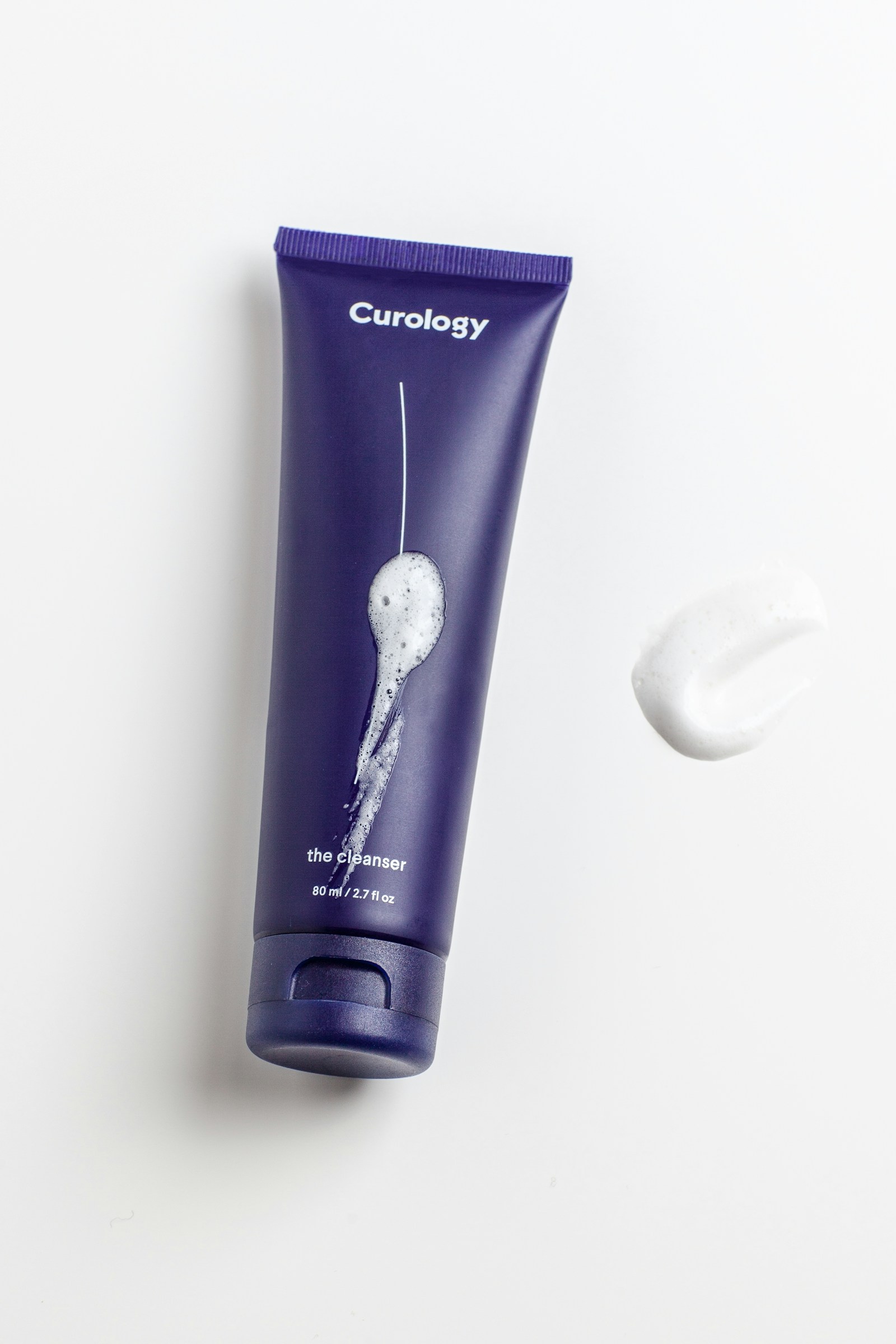
A pale cream closed on itself, the look of a fat film before you know which fat it is. Image credit: Unsplash. Unsplash commercial licence.
A pale, dense cream always looks like care, which is the problem with judging care by density. Whether the mass underneath is petrolatum or a ceramide film, the surface will not say. The horny layer will, by morning, sometimes by complaining. Petrolatum is an inert hydrocarbon blend. It barely enters the lamellar system. It sits on it and, in a thick film, cuts transepidermal water loss sharply, by well over 90 percent in the classic occlusion literature. A ceramide film with cholesterol and free fatty acids does something else, quieter and more structural. It supplies parts from which the barrier rebuilds its own sheets. Calling both slugging puts two materials inside one trend word, and the trend word is how the wrong face gets the wrong lid.
Slugging, as it arrived from sleeping masks and Korean evening routines, usually means the last, thick, occlusive step. Sometimes over actives. Sometimes instead of them, which is a different recipe wearing the same verb. On a lipid-poor, dry barrier in winter, a thin petrolatum finish can be the right call, almost boring, which is how you know it might be correct. On sebum-rich skin in a humid summer, on adult jawline acne, on a face under retinol, the same finish is a lid with consequences that show up as lesions the trend did not mention.
What petrolatum is for
Petrolatum is chemically dull, and dull is its quality, the reason pharmaceutical grades exist and the reason it outlasts plant oils with better publicists. It does not oxidise the way an unsaturated plant oil does. It carries no fragrance load of its own. In pharmaceutical grade it is a well-characterised occlusive you can explain without a metaphor. It keeps water that the horny layer already holds, or that a humectant has just bound, from leaving. Under that lid the epidermis can catch up on its own lipid synthesis, if the enzymes are running at all. The lid is the condition. The building material is still the cell’s, or the ceramide cream you put down first.
The comedogenicity argument is worn out and often misquoted, usually in favour of whatever oil the speaker is selling. Modern, highly refined petrolatum sits better in the old rabbit-ear tables than many plant oils, a fact that annoys the natural aisle and does not settle the face in front of you. A thick film on follicularly hyperkeratotic, sebum-rich skin can still block the opening mechanically. That is occlusion, a physical lid, and it needs no mythic index to be real. On the dry cheek of a 60-year-old client in January, the same film is often exactly the last gram required. On the chin of a 34-year-old with adult acne, it is the wrong site, and the wrong site is the whole argument.
Plant oils sold as a natural slugging substitute are chemically busy, which is the opposite of petrolatum’s virtue. Unsaturated fatty acids oxidise. Some disturb lamellar order when they arrive in excess, a surplus the trend encourages because thickness photographs as generosity. Essential-oil additions sting a barrier that is already open. An oxidised oil under occlusion is a peroxide problem with a better reputation than petrolatum, and reputation is how peroxides get a second night on the skin.
Ceramides in a ratio you can ask for
The lamellar sheets between corneocytes are ceramides, cholesterol and free fatty acids, in a ratio the repair literature often sets near equimolar. Formulas that offer the three classes in that proportion can materially support a disturbed barrier, which is a claim you can tie to a formula rather than to a texture. Phytoceramides from wheat or yeast are not identical to human ceramide classes. In a considered vehicle they can take on part of the role as related sphingolipids. Skin-identical ceramides, named by class, are the more precise buy when the price allows and the supplier will say the class out loud.
A ceramide at INCI position nine, with no percentage, in a gel that is mostly water and a light ester, is a hint. Hints are inexpensive to print. The film that repairs a ratio needs enough of all three lipid classes, a pH near the skin surface and a texture that does not sit as a wax plate. That texture is often less dense than the petrolatum in the photograph, which confuses people who equate density with repair. It is busy with a different job. Density was the occlusive’s costume.
Petrolatum over such a ceramide film can make sense in dry air: building blocks first, then a thin lid, in that order, with the lid thin enough to name. Petrolatum instead of any lipid care is a winter stopgap. When the heating goes off and humidity rises, the lid becomes a burden the client will describe as glow and the horny layer will experience as a prolonged swell.
Petrolatum holds water in. Ceramides supply parts for the sheets. A pale cream can be only one of those, and the chart should say which.

Where the lid does harm, specifically
The most expensive version of the trend is occlusion over an active that already opens the barrier. Retinol, retinal, glycolic acid, high-strength salicylic acid: under petrolatum their residence time rises, and often their penetration, which means a tolerable night becomes an irritated one without anyone changing the percentage on the bottle. A clinic that sells slugging as a booster is selling an uncontrolled dose increase. Boost is the polite word for a variable you did not measure.
Humid air does the rest. A Seoul summer, a poorly cooled treatment room, training in the evening: sweat under a dense film macerates the horny layer. The client calls it glowy, because glow is the available compliment. The horny layer calls it swelling that went on too long. In those conditions a light ceramide lotion is the better membrane. Petrolatum stays in the tube until the air changes, and the air does change, which is more than the trend admits.
- Dry, lipid-poor barrier, cold air: a thin petrolatum last step over humectant and lipids. A finger-thick coat is costume.
- Adult acne, dense comedones, hot humid months: leave the U-zone unslugged. Keep the ceramide film light and drop the occlusion.
- Petrolatum over a newly introduced retinoid or a strong acid raises the dose. Push is the wrong verb for a barrier you are trying to keep.
- Plant oils are not milder occlusion by default. Check oxidation stability. Strip the scent. Scent is how irritation gets a personality.
- Judge the result the next morning, in ordinary light. A film that clogs pores overnight was too much, even if it felt comfortable at 9 p.m. under a lamp.
A client is allowed to dislike petrolatum. The texture annoys people, and annoyance is data. The right substitute is then a formulated ceramide finish, with a ratio and a percentage. A watery toner with the word ceramide in the name is a different disappointment, lighter and equally off the point.
Two lines on the chart, and the trend word retired
A shelf that holds both materials should list them as two lines. Occlusive finish and lipid ratio are two indications. They are also two climates, and a client who travels between them needs the chart to travel with her. A single slugging add-on for every evening routine is convenient for the menu and technically wrong for half the faces that will buy it.
Petrolatum remains the most honest occlusive in cosmetics because it repairs nothing and smells of nothing, a pair of negatives that are actually a specification. Ceramide membranes remain the more honest repair because they seal less spectacularly and do more of the work the word repair implies. The pale cream in the picture could be either, and the picture will not help you. The clinic’s job is to know which, before a finger goes into the jar, and to say it in a sentence dull enough to trust.
From this desk

K-beauty and lash architecture
Brow lamination: the week of shine, and the week the cortex snaps
Read
K-beauty and lash architecture
Glass skin is a reflection: liposomes, water, and a surface without scale
Read
K-beauty and lash architecture
Fermented Centella: four triterpenes, and the chromatogram that prices them
Read