Cold on the cheek, and the vessels that answer first
A short subzero pass can blanch skin and briefly quiet a soft puffiness. Raynaud, cold urticaria and an unclear nodule end the session before the nozzle moves.
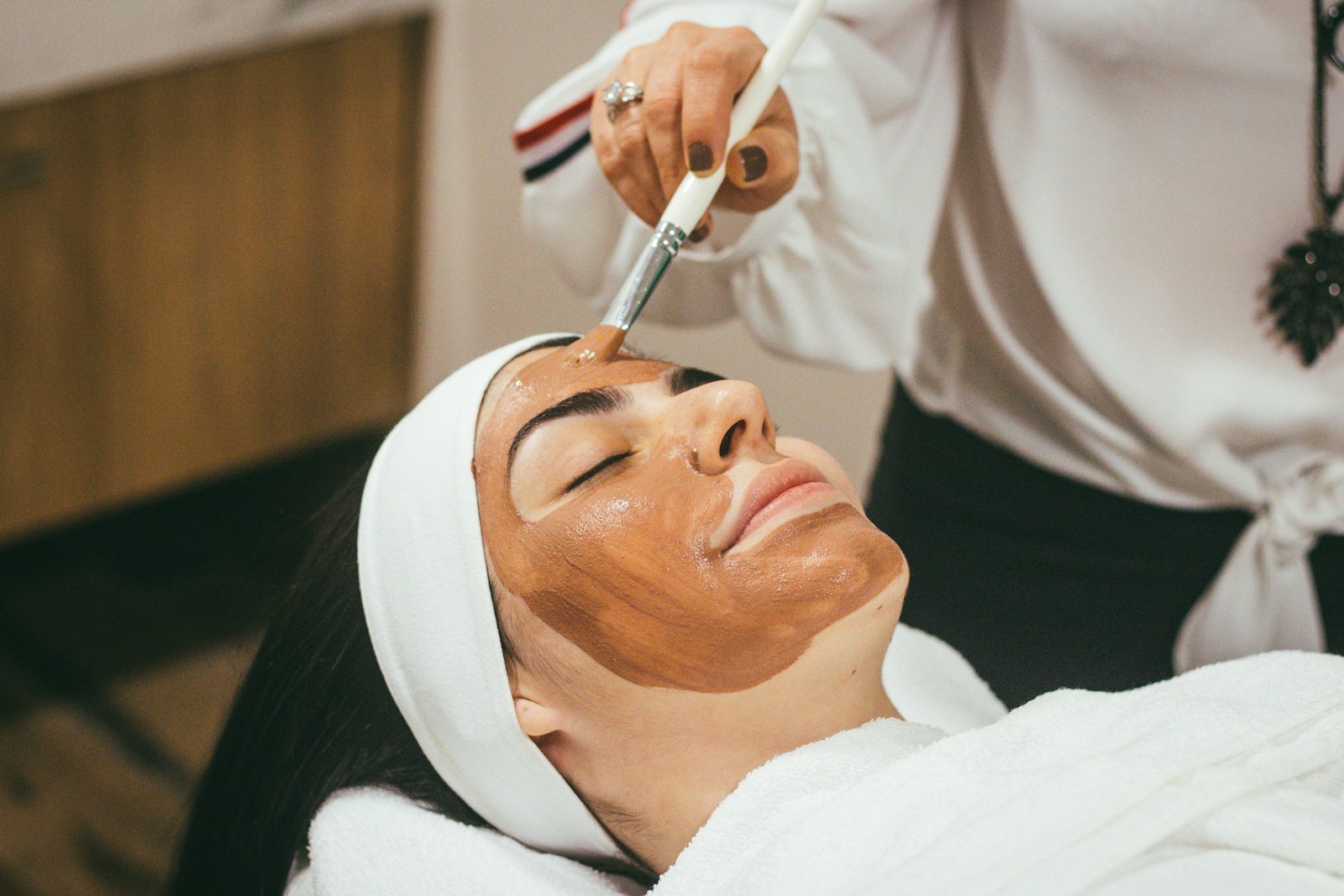
The face goes pale, then red. That rebound is blood flow, caught before the marketing shot. Image credit: Unsplash. Unsplash commercial licence.
Cold constricts cutaneous vessels. Sympathetic fibres do part of the work. Local mechanisms in smooth muscle do the rest. A cryofacial uses a short window of it: superficial, visible as paler skin, often followed by redness when perfusion returns. The photograph loves the pale second. Liquid nitrogen does not belong in that window. It is a medical tool for tissue destruction, a different temperature world with a different consent. Mixing the two under the single word cryo means the protocol has already been left. At industry practice the devices are demonstrated on intact skin for marketing. The contraindications are what the photograph leaves out, along with the questions that should have come first.
What the vessels do in the first minutes
Cold-air devices in aesthetics work with strongly cooled air, often well below zero at the nozzle, with short contact time and a set distance. Metal globes from a refrigerator, and ice cubes in a cloth, sit far above that, near zero. The skin response is related. Skin temperature, duration and area decide it. The name on the device is branding. Noradrenergic fibres pull peripheral vessels closed. Locally, nitric oxide influence and blood flow fall. A mild oedema can fill less while the stimulus holds and shortly after. That is a mechanical and vasomotor effect on fluid that is not yet fixed in the tissue. It is a temporary change in how full the surface looks. A lasting shape of the face is a different profession.
If the cold continues, cold-induced vasodilatation can set in, described in the fingers as the hunting reaction: cyclic reopening of the vessels. In the face that pattern is less reliable than in the hand. What the client often sees is simpler. First pale, then red. The redness is perfusion returning, sometimes overshooting. It is the physics of blood flow after a cold stimulus. Waste has not been drained. The colour has changed because the vessels changed their mind.
Less inflow is a smaller puddle, for a while
Lymph capillaries move fluid by their own motility and by external pressure, as in manual lymphatic drainage, which works with a very light pull. Strong cold does not replace that technique. It can throttle arterial inflow and so make a fresh, soft oedema look smaller. It does not open lymph nodes, and it does not hand the kidney or the liver a job they were not already doing. The face looks quieter. The clearance organs keep their own timetable.
Stacking cryo and gua sha in one session requires a known order. Strong cooling followed by firm rubbing contradicts both ideas. The vessels are narrow, the skin is less perfused and mechanically more fragile, and firm pressure on cold skin produces petechiae sooner. A quiet, short cool-down after gentle drainage can lower the subjective sense of tightness. The effect stays temporary, minutes to a few hours, and it depends on why the region was water-rich: salt from the day before, sleep, a reaction to an active, a true disease oedema. Those causes do not share a nozzle setting.
A disease oedema, a one-sided swelling, tenderness, or a nodule that is new, is left alone. Cosmetic cold that optically smooths a finding delays the observation that was needed. The mirror in the cabin is flattering for ten minutes. The finding is still the finding when the client reaches daylight.
Raynaud, cold urticaria, numb skin and unclear nodules end the treatment before the first pass of the nozzle. There is no short test pass.
Stop signs stay stop signs in ordinary light
Raynaud’s phenomenon is vasospastic. Cold is the classical trigger, usually in the fingers, sometimes in the feet, occasionally in the face. A person who knows white-blue-red attacks in the hands stays away from a cold-air device, even when the face has been quiet so far. The stimulus can start an attack in the hands. The cabin is the wrong room in which to find out whether this time will be fine. Curiosity is not a protocol.
Cold urticaria forms wheals at the cooled site and, in the worse case, systemic signs when the area is large. A question about wheals after cold wind, cold water or ice belongs in every first consultation, before anyone runs a device over cheeks and neck for convenience. Cryoglobulinaemia and related cold sensitivities are medical diagnoses. A client who names one of them stays with uncooled cosmetics, or returns to the care that holds that diagnosis. The device can wait. The history cannot.
Numb areas, fresh wounds, an active herpes, a region freshly operated or freshly injected sit on the same stop list. The interval after filler or toxin is set with the practice that injected. A clinic does not invent a blanket pause and then cool anyway. Unclear pigmented or firm nodules are left unmassaged and uncooled. Redness that is rosacea can return harder after the first blanch. Anyone cooling flush-prone skin says so beforehand and has a stop if the reaction exceeds the expected rebound. The rebound is part of the briefing, said before the nozzle, while the skin still has its ordinary colour.
A protocol that can be repeated next Thursday
Beforehand: questions on Raynaud, cold wheals, infection, wounds, injections, sensory loss. Look at the skin. Dimming the light is not the examination. During the pass the distance stays set, the nozzle keeps moving, the passages stay short, one region after another. Continuous touring of one cheek to the pain limit is how a demonstration becomes a complaint. The client has to be able to feel the skin. Numbness is a stop, said out loud, and the device comes off.
Afterward the skin is noted. Rebound redness is expected and explained. A hot towel stays off the face. A high-percentage peel stays out of the same session. Cold and acid on the same area add stimuli that can no longer be assigned when the complaint arrives. Documentation fits in one sentence: device or tool, distance or medium, duration, skin response, stopped or continued. Sales language about detox, a lymph flush, or tightening over weeks has no place in that sentence. What remains is a short vasomotor change and, in a suitable client, a pleasant reduction of fleeting water. A person who needs more needs another discipline. A colder nozzle is not that discipline. Demonstrations at industry practice can show the blanch and the rebound under controlled skin. They cannot clear a Raynaud history that was never asked, and the photograph will not ask it either.