What a cured film actually lets through the nail
Hard keratin, a thin lipid fraction, and a polymer stack. Water-vapour numbers, lamp dose and a lifted edge separate the bottle from the chemistry.
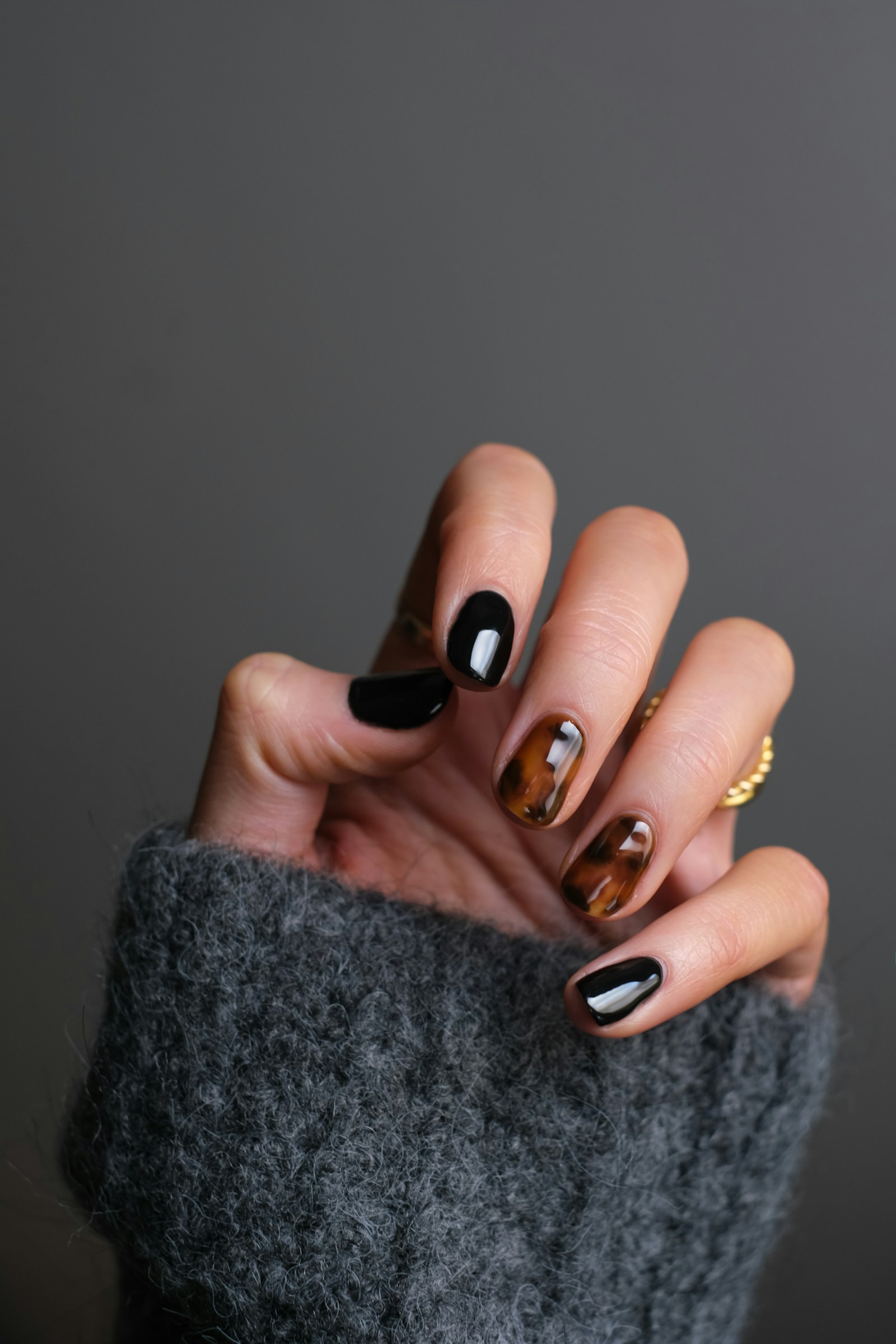
Lacquer on a keratin plate, where vapour, solvent and a lifted edge part company. Image credit: Unsplash. Unsplash commercial licence.
Forget the bottle that promises a nail can breathe. A fingernail is roughly half a millimetre of hard keratin, and it has no vessels of its own. Circulation belongs to the matrix and the nail bed, tucked underneath. The lacquer is a dried film on a plate whose water content follows the room, commonly somewhere between 10 and 25 percent, with a lipid fraction clearly smaller than the stratum corneum of skin. Some small molecules still move through that hardness. They travel a long path. At industry practice the word breathable is printed larger than the method. The method is what a clinic can actually buy: water vapour, sometimes oxygen, and a stack of base, colour and topcoat tested together rather than a lonely clear coat in a brochure.
Diffusion through keratin
Acetone in a soak-off is the studio version of the physics. A good solvent gets under the film and into the plate within minutes. Water takes its time. Ions, which means most salts, stay practically outside. A brand that stirs a caring mineral into a lacquer and talks about penetration owes a measurement through the cured film. An INCI line is a shopping list. Diffusion follows the gradient: concentration and solubility in keratin, then molecular size.
Nitrocellulose lacquers dry when the solvent leaves. Aqueous polymer dispersions often coalesce out of water. Photo-cured gels are a chemical network. Same colour depth on a sample finger, three different barriers, and gloss will not sort them. A hallux nail is often thicker than a fingernail, which stretches the path again. Between a thin polymer lacquer and a fully cured UV gel sit crosslink density and free volume. Those two decide the traffic. A buyer who ranks systems by shine has already left the measurement behind.
Water vapour is a method
In data sheets, breathable usually means water-vapour transmission. Cup methods in the family of ASTM E96 are the usual rig: a humidity gradient, a defined area, a change in mass over time. Film thickness and temperature move the result, and so does the question of whether the film lies free or on keratin. A figure for the clear topcoat describes the clear topcoat. Primer, two colour coats and a sealer are another specimen.
Oxygen transmission is a different instrument. Sales sheets often skip the standard, the thickness and the temperature. Quote the number with the unit and the specimen, or leave the adjective on the carton. The plate itself consumes no oxygen. A tighter film does not suffocate a living surface layer, because no such layer is sitting there. Moisture under a lifted gel is a cavity with water. That is a hygiene finding. Folding it into the same sentence as a vapour number mixes a diffusion rig with a wet niche.
Anyone selling permeability puts thickness, specimen and the full layer system on the table. A single figure for the clear coat is a brochure.
UV gel, residual monomer, removal
Classic UV and LED gels are built on urethane acrylates and reactive diluents. The photoinitiator starts the radical polymerisation. The lamp supplies the dose. After a full cure, free volume is small. Water and most actives barely diffuse, which is why the material holds length and gloss. A cured hard gel is a tight network. It behaves poorly as a membrane, and that tightness is the point of the wear.
Soak-off systems are crosslinked less tightly on purpose, so acetone can swell the film later. The compromise is wear time against removability. It says little about traffic through the film during the weeks it is worn. Under-dosing the lamp saves minutes and leaves residual monomer in the network. Hydroxyethyl methacrylate, HEMA, is a known contact allergen in that context. In the EU, HEMA in nail products is tied to professional use and to warning statements. Sensitisation shows up where the material stayed under-cured, and where it met skin.
The initiator is no longer a free design choice. Trimethylbenzoyl diphenylphosphine oxide, sold as TPO, has sat on the list of substances prohibited in cosmetics since 1 September 2025. The safety report of the current batch outranks a data sheet from 2024. Alternative initiators leave the cure duty where it was. Lamp, distance, layer thickness and the age of the LEDs belong in the protocol. Removal often shapes the plate more than the weeks of wear. Burrs make frictional heat and take keratin off. A foil soak needs time and the right solvent. A dense hard gel that only yields to heavy filing thins the plate over the months. A soak-off filed away anyway wastes the architecture it was built for. Brands that show both systems on one industry practice board can be asked which lamp dose the soak-off actually received in their own demo.
Which film belongs in which room
A thin polymer lacquer with a documented water-vapour transmission suits a short wear, a plate that should exchange moisture between appointments, and a client who does not need a strong extension. A UV gel suits mechanics and gloss once the removal has been planned. The bottle is fluent about doing both in one coat. The chemistry keeps the jobs apart. Purchasing can stay with a short list said aloud: standard, thickness, complete layer build, residual monomer, initiator status. A supplier with none of those is selling a word in a larger type size.
Lifting is where the practical risk opens. Once the film lifts at the edge or in the centre, water stands in the cavity. Pseudomonas aeruginosa uses exactly that niche. Fit and dryness decide it. Dry storage, clean burrs, and cotton that stays out from under the margin. Green discolouration ends the cosmetic chain. Lacquering over it keeps the organism in a wet room. HEMA and the initiator stay checked against current EU law. TPO has been off the cosmetic list since September 2025. A soak-off wants solvent and time. A hard gel wants a plan that does not sand the plate thin. The next supplier line will still print breathable larger than the ASTM line. The clinic that leaves with a thickness and a layer build already knows which bottle was a film.