Green nail in the salon: Pseudomonas, water, and the gel you leave off
Pseudomonas aeruginosa makes pyocyanin in a damp cleft under lifted gel. Dry work, single-use files and a physician handoff match the organism. Lacquer does not.
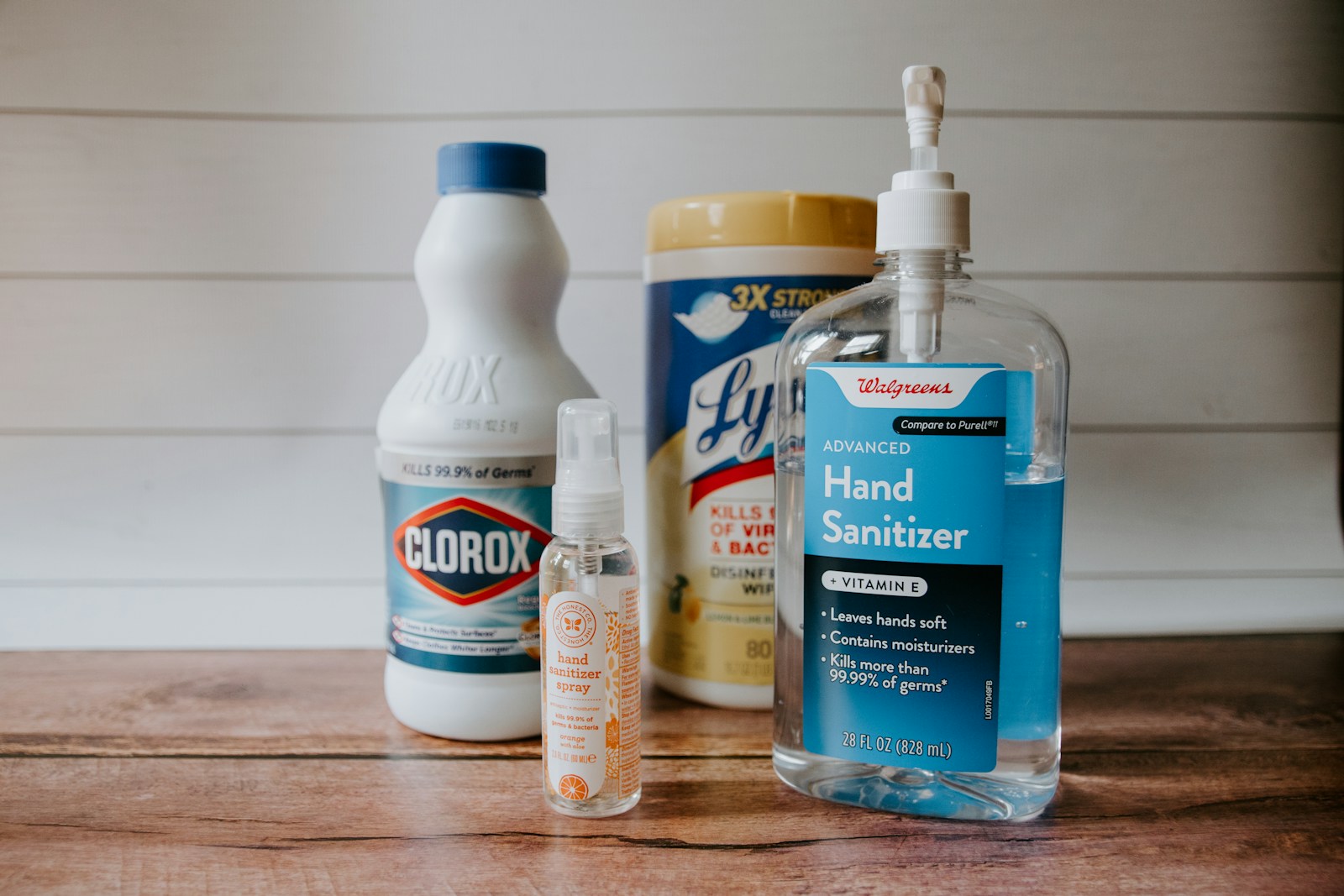
Disinfectant bottles on a wooden board, useful only when the surface is dry and the contact time is kept. Image credit: Unsplash. Unsplash commercial licence.
The bottles on a wooden board are the ones every nail studio owns and not every studio runs to the label: surface, hands, a kill claim in small type, photographed dry. Pseudomonas aeruginosa reads the water. It reads the label only if the contact time is real, which is the part of the label people skip when the next hand is already in the chair. Standing water in a soak bowl, a damp buffer in a drawer, a gel that has lifted and left a wet cleft underneath: that is the habitat. There the bacterium makes pyocyanin, and the plate turns green. An antifungal from the same drawer leaves the colour where it is. The pigment is bacterial. The organism is not a dermatophyte, however convenient the fungus bottle is, already open, already familiar.
Green nail syndrome, chloronychia, is a hygiene finding and a medical finding at the same time, and holding both without merging them is the work. The studio often built the conditions: the soak, the damp file, the gel left until it lifted. The studio does not treat the infection. Lacquering over the green preserves the cleft and the moisture in it. Working it with a fungus bottle spends weeks on the wrong kingdom. Lifting the product, drying the plate, taking the instruments out of circulation and sending the client to a physician when the signs say so is the work that matches the organism. It is less glamorous than a new set. It is the set that does not recruit the next client.
At industry practice the same bottles are demonstrated on dry boards under good light, where every spray looks decisive. The failure happens later, on a wet table between two clients, where contact time is the first thing cut because the clock on the wall is louder than the clock on the label.
Where the organism actually lives
Pseudomonas is gram-negative, motile, and undemanding as long as moisture is present, which is a modest list of needs and an easy one for a salon to provide by accident. On a dry, clean surface it is manageable. In the biofilm of a damp file, in a water bath that has seen several hands, under a lifted soft gel or acrylic, it is at home, and at home it pigments. Pyocyanin stains the plate green to blue-green. Pyoverdin can add yellow tones. The colour sits in the keratin. It grows out with the nail after the organisms are gone, which means a promise that the colour will be gone by the end of the appointment asks keratin to do something it will not do. Keratin is slow. Appointments are not. The stain outlasts the speech.
Onycholysis, separation of the plate from the bed, is the usual entrance, and studios manufacture it in ordinary ways. Gel left too long. Trauma. An aggressive burr. A nail that lives in water, occupationally or by enthusiasm. Under the lifted plate, moisture stays, cleaning does not reach the cleft, and the bacterium has quiet. A dry overlay that still adheres is a poor habitat. A good set is a hygiene object. Colour is the smaller part of that job. A lifted one is the habitat, green or not yet green, waiting.
The practical split from a dermatophyte is colour and tempo, useful and incomplete. Fungus is usually yellow, crumbly, slow, without that clear green. The two can share a nail, which is why the eye is a start and a poor finish. A nail technician does not close the question by looking. A physician can culture. A studio can end the wet niche. Those are different jobs. Both are required. Doing the second while pretending it is the first is how weeks get lost and the cleft stays damp.
Disinfection that has met water and still works
Alcohol on a wet surface is a dilution with a confident smell. Pseudomonas persists in damp niches better than the copy on a quick-spray bottle suggests, which is why the bottle’s confidence is not a plan. What counts is a hygiene plan with nouns: which surface, which product with a stated bactericidal action, which contact time, which instruments are critical and go through a validated reprocessing route, which files are single use and leave with the client in the bin. In DACH studios the VAH listing is a usable compass for disinfectants. A bottle that promises care and 99 percent, without a contact time and without a spectrum, is a mood against a water bacterium. Moods do not have spectra.
Files, buffers and sanding bands that cannot be reprocessed safely go in the bin after that client, immediately, before the instinct to save a nearly new buffer wins. A buffer left to dry in the drawer often stays the damp sponge the next hand starts on. Communal soak baths are an invitation format, and the invitation is accepted by more than one species. If a hand must be soaked, it is soaked alone, the water is discarded, and the bowl is reprocessed. Better, and usually possible: as little soak as the service allows. Dry work is the actual protection against this organism. Water is the amenity that recruits it.
After a lifted gel comes off, the nail is not sealed again while green, moisture or separation remain. Sealing closes the niche and calls it a repair. The plate is dried and kept short. The client hears that colour in the keratin can stay visible for weeks after the surface is already clean, so she does not spend those weeks hunting a product that erases biology. A firmly adhered, dry plate can be a candidate for gel again, later, when the cleft is gone. Before that, a medical base coat from a marketing shelf changes nothing microbiological. The adjective medical is doing decorative work. The cleft is still a cleft.
Green is a pigment in the plate and a water problem in the studio. Fungus is a different organism. Lacquer is a lid.
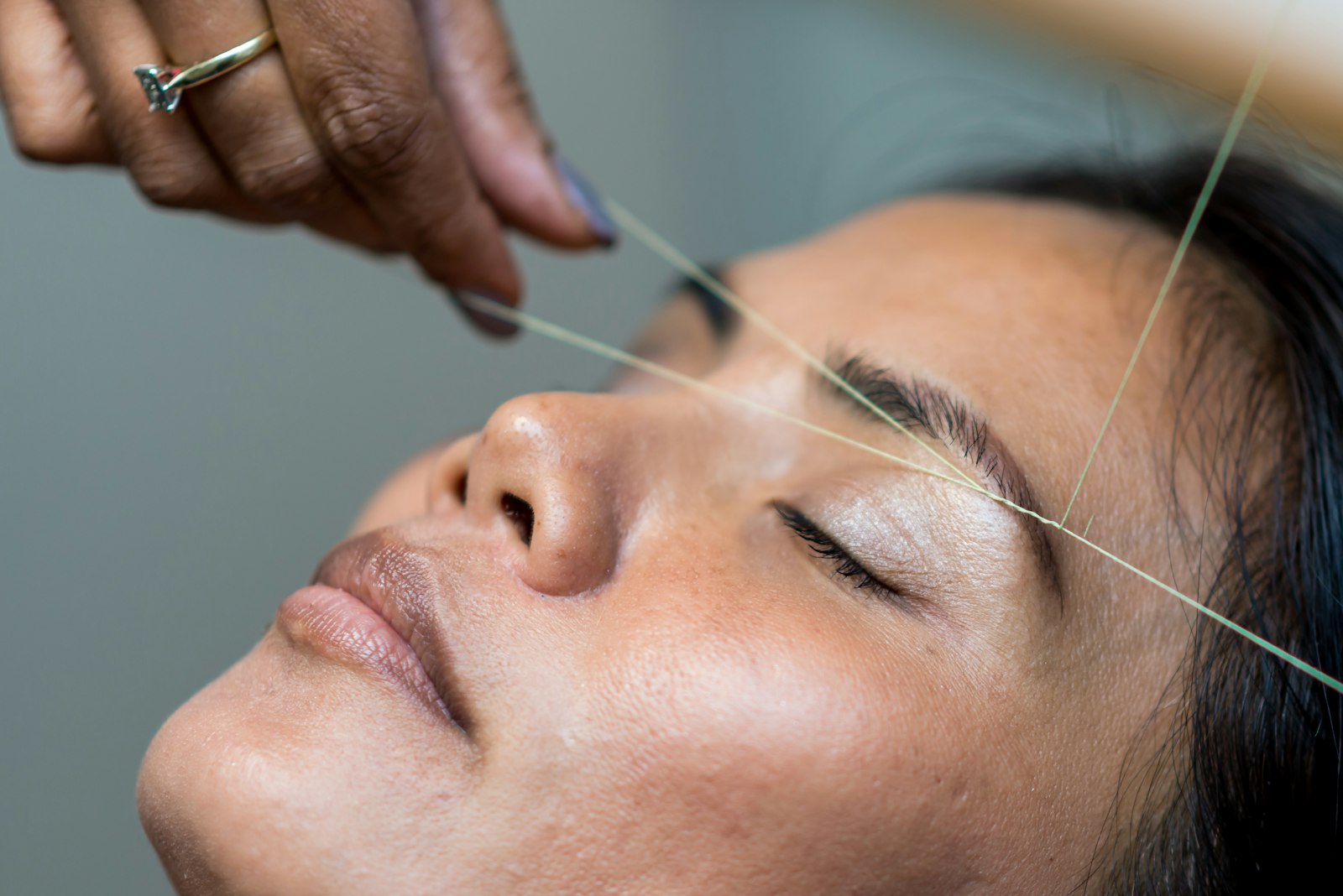
The handoff, written so it cannot be negotiated by the diary
The studio removes product, stops moisture, writes down what it saw, and hands over. An antibiotic is a prescription. A homemade solution under a lifted plate is a hobby. Neither belongs on the trolley.
- Take the product off completely. Leave the green unlacquered. Leave the nail dry. No soak and no fresh gel in the same appointment, however persuasive the empty slot looks.
- Single-use files, reprocessed instruments, hands, surface. The station of the affected client is dealt with before the next hand arrives, including the buffer you were going to flip and reuse.
- Drop communal water baths and damp storage. Do not stack buffers. The bin is closer than the drawer, and closer is the correct distance.
- Physician, once there is pain, pus, a red nail wall, fever, an immunosuppressed client, diabetes, or colour spreading under a plate that still looks intact. Culture and any antibiotic decision happen there, with a name on the prescription.
- Tell the client in writing: the green stain grows out. Lacquer until then hides it and can hold moisture. Photographs for the course. A chat message is a poor culture.
A studio that dodges this path because the day’s revenue sits in gel produces the next green nail on the next client, which is an expensive way to protect an afternoon. Pseudomonas is the consequence of water plus time plus a cleft. Luck is the wrong noun for a pattern you can see in the drawer.
Bottles are the start. The dry surface is the plan.
A correct product, sprayed on a dripping surface for less time than the label states, is theatre with a chemical smell. The same product on a dry surface, with the contact time kept, with single-use material, and with the decision to leave a lifted gel unsealed, is an operating duty. industry practice is a reasonable place to compare listings and contact times, reading the small type. It is a poor context to decide that a green plate can be sealed medically and sent home under a fresh colour. Past a simple stain, the green nail remains a medical finding. The studio stays responsible for the niche and for the door to the practice. Holding both, without playing physician in the chair, is the professionalism behind the bottles. The bottles were never the whole of it. The water was.