Orthonyxie: the brace that spends months so the wedge can stay unbooked
Spring-steel and adhesive braces lift a nail edge out of the sulcus. A hallux plate grows about 1 to 1.5 millimetres a month. Surgery remains the last resort, after force and follow-up.
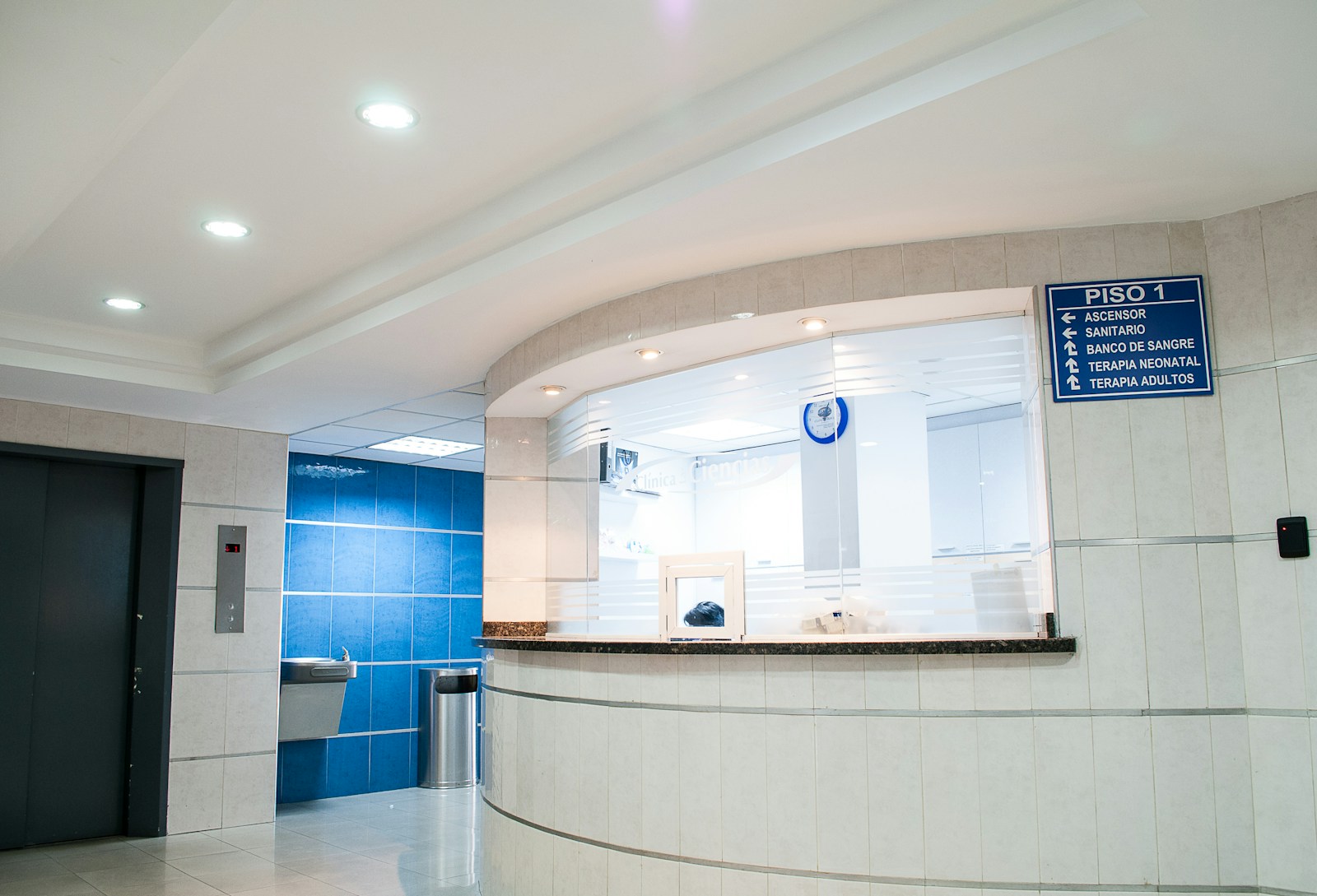
Stainless instruments in podiatry light, built for a force small enough to write down. Image credit: Unsplash. Unsplash commercial licence.
On the podiatry aisle at industry practice the brace kits sit beside gel lamps, priced like an add-on and explained in the time it takes to pour a coffee. The mechanics are slower than that aisle, and slower than the coffee. A corrective brace lifts the nail edge out of the sulcus over weeks and months. The force has to unload the fold and stay small enough that the bed does not tear. When the nail is wall-incarnated, granulation tissue is bleeding and the inflammation will not settle, the brace is the wrong instrument. A wedge resection is then the conversation with a physician, said early, without romance for the wire. In many earlier stages the brace is what keeps that resection off the calendar, which is the entire point of learning the force.
Spring steel, wire built on Ross-Fraser logic, adhesive braces, composites stiffened with a plastic wire: the constructions differ in the hand and in the photograph. The load path is shared. Tension and torque act on the plate, the edge rises, pressure on the sulcus falls, the wall can detumesce, and the nail grows on under a different load. A hallux nail advances roughly 1 to 1.5 millimetres a month. A brace declared finished after two weeks has decorated a short stretch of growth. The plate behind it is still the plate that cut the fold. Decoration is a poor clinical endpoint, and it is the one supplier leaflets prefer because two weeks fits a season.
Force on a curved plate
The plate is keratinised and transversely curved, a small architecture with a bad temper when the curve is too tight. When that curve deepens, or a free edge cuts the sulcus, unguis incarnatus follows, often at the tibial border of the hallux, the side people notice when a shoe has been honest about being too narrow. A narrow toe box, a cut that leaves a spike, and hyperkeratosis that further narrows the fold all amplify the same conflict. The brace attaches to the plate. Bone is outside its reach, which matters the moment someone hopes a wire will argue with an exostosis.
Activated spring steel wants to return to the shape it was set in, and it takes the nail edge with it, slowly, if the activation was modest. Adhesive systems spread force over a larger area. They belong where the plate is thin, or where a wire will not grip without cutting the keratin, a grip that looks secure in a demo and hurts by evening. Too much force is an injury of its own, and it announces itself without subtlety. Pain at rest, a whitish lift, the start of onycholysis under the wire: the brace is loading the bed. Too little force changes nothing, and the memory that survives is that braces fail, which is how a useful instrument gets a reputation for folklore.
Activation is written down, with the date and the amount, in a hand another practitioner can read. Review follows nail growth, not the practitioner’s diary gaps. A brace left untouched for six months on a plate that has grown forward sits on the wrong millimetres. It is still a brace. It is no longer on the quarrel.
Material belongs in the same note, because materials fatigue in ordinary ways. Spring steel fatigues. Adhesive lets go once the toe is wet, which toes often are. A wire abrades the opposite edge when the ends are not seated cleanly. In trained hands this is a device with a timetable. A video with a calm voice does not confer that training, however calm the voice and however clean the nail in the frame. The open sulcus can infect after an untrained set. The supplier desk will not be in the room when it does, which is the detail the coffee explanation leaves out.
When the wire waits, and waits without apology
Acute infection with pus, a red forefoot, any suspicion that bone is involved, peripheral arterial disease, a diabetic foot with neuropathy and ulcer risk: the timetable here is medical, and it is not a timetable you accelerate with a kit. A physician sees the foot before any wire is activated. A brace seated on an infected, granulating wall leaves the bacteria where they are and may add a foreign material to a fold that is already failing. Foreign material is a brave addition to pus. It is rarely a kind one.
A subungual exostosis pushes the nail up from bone. The edge looks incarnated, and the look is convincing, which is why wires get tried. The cause sits under the plate. No activation removes it. The same limit holds for any suspicion of a tumour of the nail unit, a suspicion the cabin does not settle and does not decorate with steel. Orthonyxia is conservative and local. It answers a mechanical quarrel between plate and sulcus. Pain at the edge has other owners. Those owners need a diagnosis the cabin does not make, and the honest sentence is the referral, said before the metal comes out of the pouch.
Wedge resection, with or without phenol cautery, remains the last resort for recurrent unguis incarnatus with a wall granuloma, once a proper brace course is exhausted or the patient cannot wear one. Impatience in week two is a poor indication, though it is a common one, because pain wants a date. After resection, nail width is gone for a long time, sometimes for good. That arithmetic belongs in the consent conversation while the wire is still an option, while there is still width to keep. Width is easy to spend and slow to regret.
The brace buys time measured in millimetres of nail growth. An operation that was already indicated stays indicated. Week two is not the month that decides.
A calendar with a name on it
A useful protocol is repetitive, almost dull, which is the correct texture for a force you intend to keep small. Appointment, photograph, force, review. It looks like a clinic diary because it is one. A demonstration carpet at industry practice can show the metal. Month four is a room the carpet cannot enter.
- Photograph the start: edge, wall, redness, shoe, cutting habit. Without a picture, the second visit is an argument with memory, and memory favours the person in pain.
- Set force so the edge clears the sulcus and the patient is not guarding against the wire at rest. Pain is a sign to reduce. It is a poor therapeutic principle, however traditional it sounds.
- Review on the growth interval. Reactivate, replace adhesive that has let go, and reduce hyperkeratosis in the sulcus only where that work sits inside the practitioner’s qualification and no ulcer threatens.
- Read the shoe and the sock with the plate. A brace inside a tight toe box loses to the shoe, every time, without drama. The box has to leave the forefoot its width, or the wire is decorating a conflict the leather will win.
- Spreading redness, pus, or a patient with peripheral arterial disease or diabetic neuropathy goes back to the physician. Carrying the brace onward as a test of nerve sits outside the protocol, and outside sense.
In Germany, podiatrists work inside a legally outlined field. A cosmetic pedicure that adds a brace because the kit looked simple leaves that field the moment the nail cuts the sulcus. The toe is then a medical problem with a mechanical option, handled by someone who can also stop. Stopping is the skill the coffee explanation never demonstrates.
Why the same edge returns
Recurrence seldom means the idea of spring steel failed. The force was wrong, the review lapsed, the shoe stayed, or a bony prominence was never named because naming it would have ended the brace conversation. Where the plate grows out for months under a reduced load, pressure on the sulcus falls, granulation quiets, and the resection stays unbooked. That is the mechanics of a plate allowed to grow while the tissue cooperates. It describes those cases. A warranty for every unguis incarnatus that walks past a stand would be a different document, and nobody honest is offering it.
The wire is doing its job when, at the end, it is barely needed, a quiet success that does not photograph as a reveal. Until that month it belongs in a practice with a review calendar and a person whose name is on the force. The slot between two gel sets is the wrong room. The two-week promise on a supplier leaflet is the wrong duration. Nail grows in millimetres. The leaflet grows in adjectives. Keep the millimetres.