Genistein, resveratrol, and the dose that has to cross the skin
Isoflavones bind estrogen receptor beta weakly. Without an assay, an aglycone and a vehicle that actually dissolves them, the serum is a botanical label.
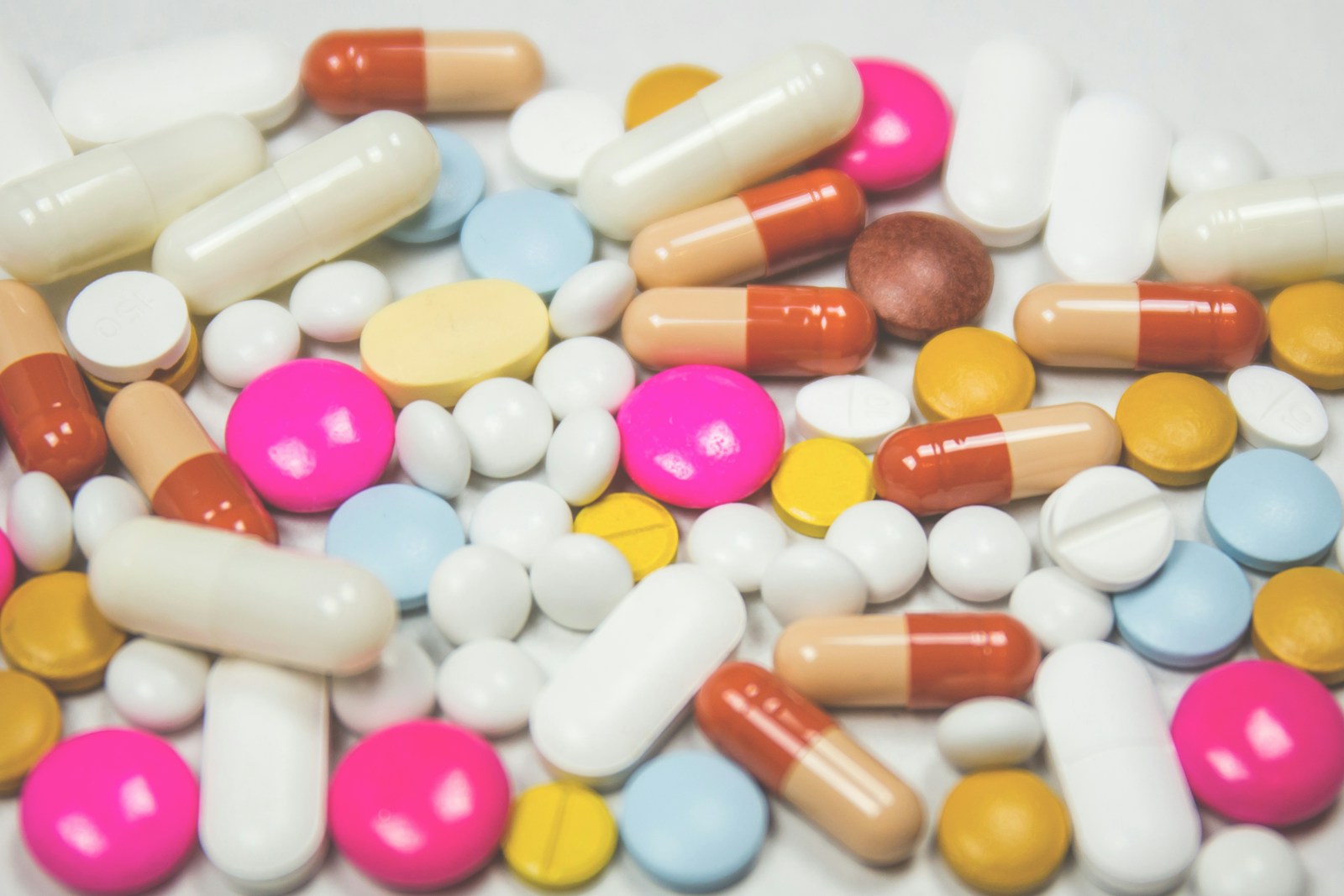
Loose capsules on a light ground, an oral dose sitting beside a problem a serum still has to solve. Image credit: Unsplash. Unsplash commercial licence.
The capsules on the table are pink, white, two-tone, pharmacy-bright, the colour of a dose someone measured. Beside them, in a clinic, sits a serum that promises soy genistein and lists Glycine Soja Extract somewhere behind the fragrance. Both get sold as phytoestrogen, often in the same breath, as if the breath were a pharmacokinetic argument. One is an oral dose that enters metabolism. The other is a molecule that still has to cross the stratum corneum before any receptor in living epidermis can see it. Dose, route and legal category are the product. Everything else is the colour of the capsule and the glass of the bottle, which photograph similarly and behave nothing alike.
Genistein is an isoflavone. It prefers estrogen receptor beta, with an affinity orders of magnitude below 17-beta-estradiol. Resveratrol is a stilbene. Its interaction with estrogen receptors is weak and tissue-dependent, a footnote beside the antioxidant work formulators actually bought it for. Folding the capsule and the jar into one claim abandons the chemistry. It also abandons the regulation, which noticed the difference before the mood board did.
What the receptor will do with a weak ligand
Dermal fibroblasts and keratinocytes express estrogen receptors. That occupancy is part of why the estradiol drop of menopause takes collagen, hyaluronan and barrier lipids with it, a loss reviewed elsewhere as a percentage across years. A weak ligand such as genistein can bind. It does not stand in the hormone’s place, and the papers do not ask it to. Published work on topical genistein clusters around photobiology and small series on thickness and wrinkle relief. A controllable serum estradiol is a different experiment, run in a different room, with a needle or a tablet and a consent form that says medical.
Equol, the gut metabolite of daidzein, matters orally because only some microbiomes produce it, which is why two people can swallow related soy doses and live in different biochemistries. On the skin that detour is irrelevant. What matters is what was filled: genistein, daidzein, or the glycosides genistin and daidzin. Glycosides are larger and more polar. They penetrate worse than the aglycone. An extract that is mostly glycoside, and does not say so, is a different raw material from a declared genistein fraction. The INCI line can look identical from across the room. The certificate cannot.
Resveratrol is supplied as the trans isomer and is expected to stay that way, which is an expectation light enjoys disappointing. High pH and oxygen pull it into less useful forms. A clear bottle under the treatment-room spots is a different substance by evening than it was at filling, especially if the bottle has been open since the first client and the spots are warm. The weak estrogenic side activity is the smaller formulation problem. Instability is the one that empties the claim while the liquid still looks like itself.
Penetration is the dose you actually bought
Genistein sits near 270 daltons, with a lipophilic logP. The rough 500-dalton rule does not exclude it from the stratum corneum, which is the fact sales teams remember and the fact they stop at. Solubility still excludes it, cheerfully. It hates water. Ethanol, propanediol or a phospholipid system puts it into solution and keeps it there long enough to matter. Without that system the percentage on the certificate is a sediment with a decimal point. Clients do not absorb sediment. They absorb what the vehicle was willing to hold.
Resveratrol, near 228 daltons, is poorly water-soluble and photounstable on top of that, a combination that makes pretty packaging a technical error. Liposomal encapsulation, or a dark, low-air pack, is the condition of arrival. A luxury finish would be optional. In honest penetration models, arrival means the stratum corneum and the upper living epidermis. The dermis as a default destination is a render. A claim of deep delivery needs Franz-cell data or at least a defensible tape-stripping study. The render can stay in the lookbook, where it belongs, beside the capsules it is not.
Purchasing has one question, and it is answerable in a minute if the supplier is serious. Does the certificate state genistein as a percent of dry matter, and can the formula’s use level be calculated from it? A soy extract at INCI position twelve answers no, politely, by existing. The same test applies to red clover, with formononetin and biochanin A, and to puerarin from kudzu. Puerarin is a glycoside, larger than genistein. Without a release strategy it is a plant name with a geography. Geography is not a flux.
A botanical label is a name. Genistein becomes a dose when an assay and a vehicle agree on the number.
What the room can do while staying a room
Cosmetic phytoestrogens are skincare with a receptor footnote, and the footnote should stay in a smaller type than the comfort claim. They are absent from the treatment of the climacteric. Flushes, bone density and an estradiol number belong in medical hormone therapy when a physician decides they belong there. A face serum does not compete with that decision. Trying is how a clinic borrows a seriousness it cannot cash.
- Ask for the certificate: genistein or resveratrol as a content figure. Botanical water is an ingredient. It is a weak dose.
- The vehicle has to dissolve the molecule. A water gel with no solubiliser is the wrong stage for either substance.
- Keep resveratrol dark and low-air. Clear glass under spots is a degradation path with good lighting.
- Clients with an estrogen-receptor-positive cancer history go back to their oncologist before anything hormone-adjacent touches the skin. That is caution. It is a verdict you are not qualified to deliver on the serum.
- Claims stay with comfort, elasticity and the photoprotection routine around them. Estrogen replacement is a drug sentence. It does not become cosmetic because the bottle is small.
Preferential binding at receptor beta is a formulator’s argument, useful because beta is present in skin and the binding is far weaker than a drug’s. It is a poor argument for reassuring every client, and a poor argument for frightening her about a face cream. Both speeches would be substitutes for the literature, delivered with more confidence than the affinity constants deserve.
A formula without a halo
A serious product names the substance, the form, aglycone or glycoside, and a range where penetration is at least plausible. One to a few percent genistein in a solubilising system is a different sum from a trace of extract sitting under the preservative, where many soy stories go to retire. Resveratrol in cosmetic systems often sits well below that genistein range, because solubility and stability set the ceiling. The courage of the marketing line sets the adjective. Ceilings and adjectives rarely match, and the ceiling is the one on the skin.
The menopausal barrier story does not step aside for the isoflavone, however elegant the receptor paragraph was. Ceramides, cholesterol and fatty acids in a physiological ratio, niacinamide, daily photoprotection: that is the frame the skin is actually asking for when estrogen has fallen. An isoflavone is at most an addition, assayed, dissolved, kept in the dark if it is resveratrol. Drop the frame and promote the isoflavone to the lead, and you have overrated a weak ligand while skipping the lamellar chemistry that shows up in the mirror by Thursday.
The capsules stay a different product. Different law. Different dose. Different addressee, usually a prescriber. The clinic does not sell them, and it should not let a serum speak as if the two objects were introductions to the same molecule. They share a family rumour. On the skin, rumour is not flux.