
Epigenetic skincare stays on the mark, never on the letters
Peptides can nudge histone enzymes in a model. Copy that claims to rewrite a DNA sequence is false, and it pulls a clinic out of cosmetics.

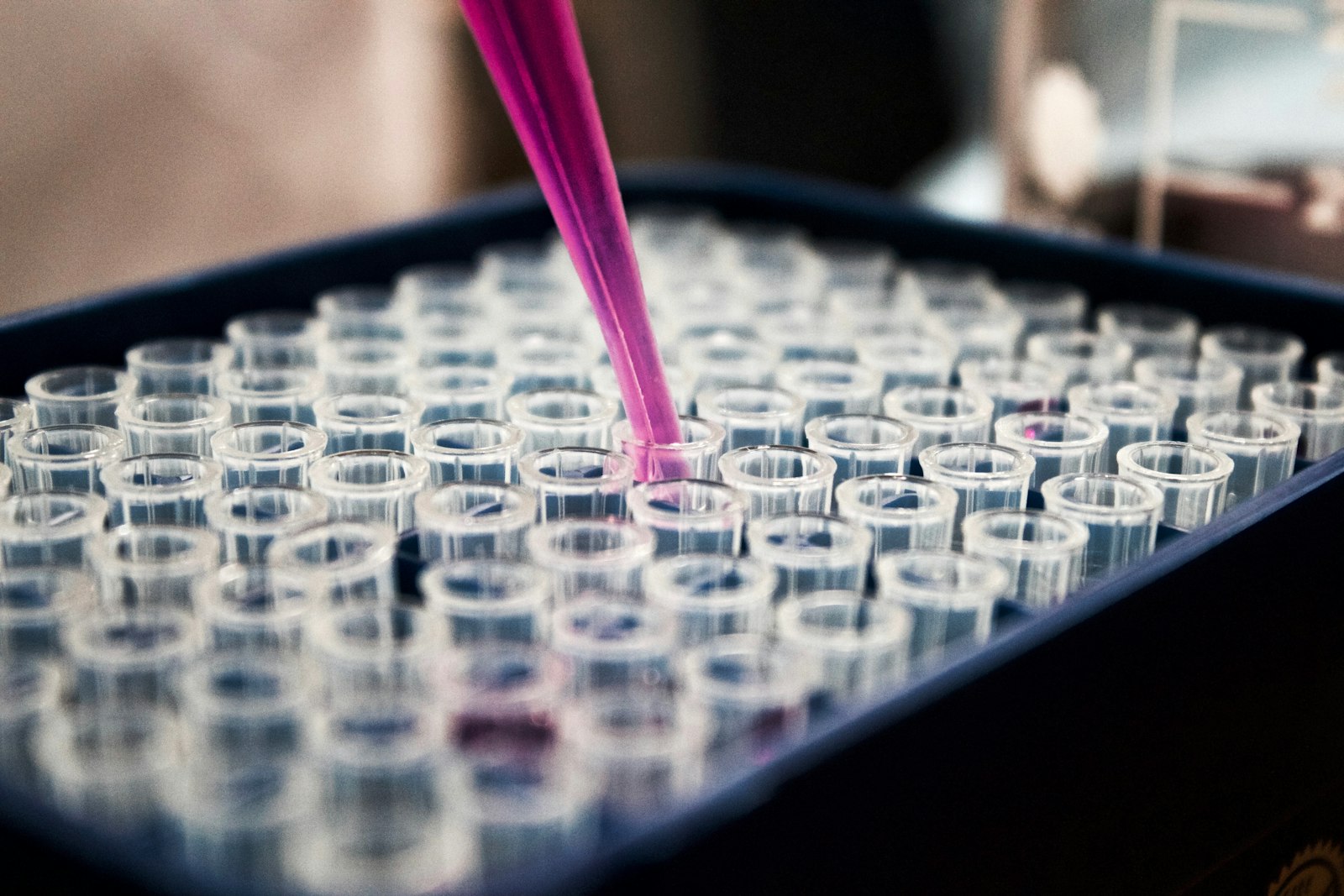
Plant extracts beside lab glass, the mood of ingredient work before any mark is measured. Image credit: Unsplash. Unsplash commercial licence.
Epigenetics is the way a cell reads a DNA sequence while leaving the letters alone. Methyl groups on cytosine, especially in CpG-dense stretches, and acetyl groups on histones shift how tightly chromatin is packed and which genes a keratinocyte can reach. That is ordinary skin biology, quiet and constant. Differentiation, barrier proteins, inflammatory replies: a large share of it hangs on those marks. A serum acquires no right, from any of this, to talk about rewritten DNA.
At the Kosmetikfachhandel, formulation buying, the word has become a sales argument with good lighting. Plant extracts sit beside lab glass in the mood shots. Peptides are called epigenetic. A few brands borrow vocabulary from reprogramming research without owning any of its tools. For clinics the line is hard, and it should stay hard. A cream that claims to change a gene sequence is saying something false. A cream that hints at Yamanaka factors, or anything in that family, in the ampoule has left cosmetics. It has entered a regulatory zone a treatment room does not have the status, the consent process or the insurance to occupy.
A mark is a mark
DNA methyltransferases, the DNMTs, place methyl groups. TET enzymes can take them off. In older skin, patterns shift at genes involved in cell cycle, extracellular matrix and inflammation. Researchers call the drift epigenetic. Selected cosmetic raw materials, certain polyphenols and peptides among them, are then tested for whether they move the activity of those enzymes in a cell model. The claim that can survive contact with a bench is narrow: enzyme activity, a marking pattern in a model, sometimes expression of a barrier gene.
The sequence stays the sequence. CRISPR, viral vectors, mRNA therapeutics: different disciplines, different statutes, different rooms. A peptide from a plant, and most epigenetic peptides In trade buying are synthetic short chains with a botanical story on the cover sheet, may bind an enzyme or nudge a signalling cascade. It leaves the bases where it found them. Phrases such as DNA reset or gene correction are factually wrong. Sharpness in the type does not repair that.
Cabin language can be tested in one supplier question. Does the claim still stand if you read it as a change to nucleotide sequence? If yes, the meeting is over. Does it stand if it says: in a skin model, expression of filaggrin or a collagen gene shifted, at a stated concentration? Then you can talk about data. That difference is the whole of this beat, and it fits on a card.
Peptides, histones, and the extract in the flask
Histones are the proteins DNA is wound on. Acetylation, run by histone acetyltransferases and histone deacetylases, loosens or tightens that winding. A slice of epigenetic cosmetics aims at those enzymes. Some peptides are sold as signals that shift HDAC or HAT activity in vitro. The dose in the dish and the dose in an emulsion at 0.01 percent peptide are often far apart, which is a polite way of saying the dish is a different country. A short charged chain crosses intact stratum corneum poorly unless a carrier, a chemical enhancer or a deliberately opened barrier is part of the design.
A peptide that touches a histone enzyme in vitro has occupied an enzyme in a model. The client’s DNA sequence is still the sequence she walked in with.
The plant extracts in the supplier line photographs, green, in a flask, in side light, are usually mixtures. An extract can contain polyphenols that the literature links to DNMT or HDAC inhibition, certain catechins among them. It also contains tannins, sugars, pigments. Without standardisation to a marker and a level in the finished formula, an epigenetic plant complex is a laboratory scent. Clinics should ask for the marker, the level and the model. A leaf in the picture is set design.
The therapy line holds here with the same firmness. Reading methylation patterns as disease markers and offering a treatment against them is diagnosis and therapy. A cosmetic clinic cares for skin that can look drier, thinner and less steady with age, using materials whose data you know and whose claims you can defend in a sentence a client can repeat.
- Methylation marks cytosine. The letter order of DNA stays put.
- DNMTs place methyl groups. TET enzymes can remove them. That is enzyme work on a mark.
- Histone acetylation controls how accessible a stretch of gene is. Peptides can modulate those enzymes in vitro, at doses the dish declares.
- DNA reset, gene correction and hints of Yamanaka-style reprogramming are false in a cabin, and they are legally exposed.
- Without a marker substance, a level and a model, a plant extract is a story with chlorophyll.
Three questions, then the meeting ends or continues
formulation buying rewards, this season, the brands that keep the word epigenetic small and the measurement large. Three questions are enough, and they should be asked before anyone sits down. Sequence or mark? Any answer that sounds like a gene scissors ends the meeting. Which enzyme, DNMT, HDAC, HAT, and at what concentration of the finished product, measured there, rather than as the pure chemical in the paper? Which gene product was read, and was the tissue skin or a tumour line that has nothing to do with a face? Moving data from a cancer cell line onto an anti-wrinkle serum is a known short circuit in raw-material advertising. You will hear it this year. You can leave.
Regulation sits in the same conversation without turning the cabin into a legal department. EU cosmetics are judged by what an averagely informed user understands. A sentence about correcting genes is heard as a medical claim, because that is what the words mean in ordinary speech. Challenges and bans in this lane are already in the file. A clinic that prints the manufacturer’s wording onto its own menu adopts the sentence, including the part a regulator will quote back. So the text gets shorter at reception. Length at the supplier line is how risk travels home in a tote bag.
Devices do not change the ethics, and they do not change the statute. Needling or a light peel can increase uptake of a peptide. The peptide remains a peptide. The clinic remains a clinic. If the barrier is opened, sterility and the released presentation apply, exactly as they would for any other active. A botanical concentrate from an open beaker has no business on broken skin, however elegant the brochure’s typography.
Care you can watch, and a clock you cannot
A defensible offer talks about care, about a peptide with a named sequence or trade name, about a concentration, and about a look you can actually watch: suppleness, and how fast irritation settles. Rewritten DNA and a clock the clinic can read belong to laboratory methods on blood or tissue. Methylation clocks are not a handpiece. Pretending otherwise is how a facial becomes a claim you cannot evidence at the mirror.
The routine stays unspectacular, which is its charm and its defence. Leave-on at night on intact skin. Photoprotection in the morning, because UV itself shifts methylation patterns and causes DNA damage, and any epigenetic care without sunscreen ignores the largest variable in the room. Gaps before strong acids are kept if the peptide is acid-labile. The client hears what the product leaves alone. That sentence costs you a little theatre. It removes the wrong expectation before it lands in a review.
Plants, glass, side light: the picture of ingredient development is fair. Extracts are made that way, in rooms that smell faintly of solvent and leaf. The journalism starts one step later, at the question of which mark moved. The sequence stays where the cell wrote it. That is how the cream remains a cream.