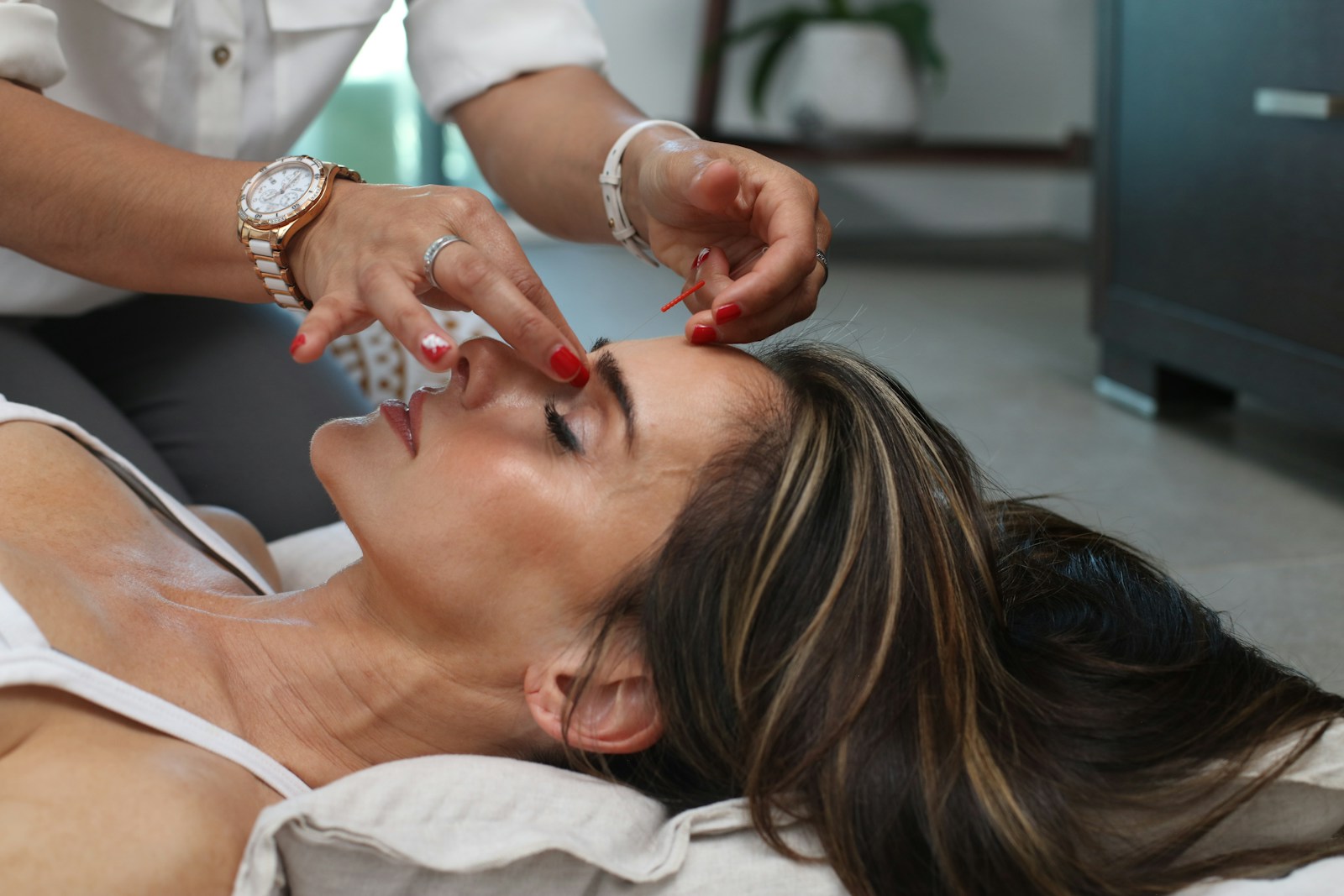
PHAs and succinic acid: the peel that leaves the lipids in place
Gluconolactone and lactobionic acid move more slowly than glycolic. On visible vessels and a thin barrier, that slower kinetic is the professional starting point.
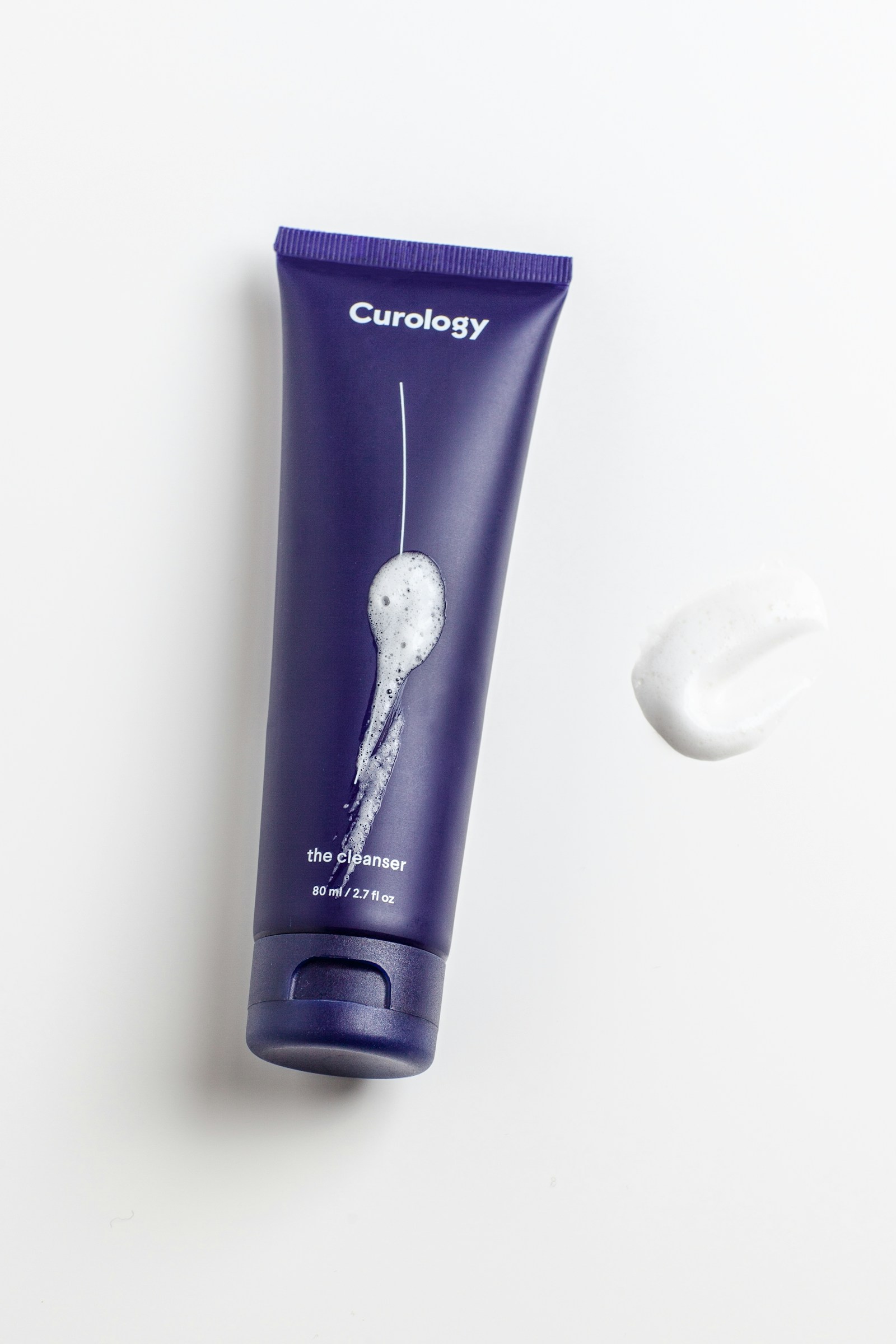
Amber glass and a pale serum on stone, pretty objects that still need a pH. Image credit: Unsplash. Unsplash commercial licence.
Glycolic acid is the smallest alpha hydroxy acid, and small is why it has manners and why it has a temper. The molecule is compact. It penetrates quickly. It releases the ionic bonds between corneocytes with a reliability chemists respect and thin barriers regret. That is why it has been the standard for a visible peel for decades, and why it is the acid that finishes a barrier already running thin. Polyhydroxy acids and succinic acid work more slowly. They are larger or differently built molecules with a different kinetic. For the look of persistent redness with visible vessels, and for barrier damage, they are the professional starting point in the room. Anxiety in the client is irrelevant to the chemistry. The stratum corneum is the audience.
At the Kosmetikfachhandel, professional retail, the amber glass still often stands beside a glycolic ampoule with a double-digit percentage, arranged by how new the story feels. Purchasing and treatment have to reverse that order before a single layer goes on. First the state of the stratum corneum. Then the acid. Then the percentage. Starting with the percentage is how you treat a bottle and call it a face.
Size that spends time
Polyhydroxy acids carry several hydroxyl groups. Gluconolactone and lactobionic acid are the two that actually show up in finished peels and leave-ons, which is already a mercy in an aisle full of synonyms. The molecule is larger than glycolic acid. It takes longer to cross the stratum corneum, and a share of the effect stays closer to the surface. Lactobionic acid also binds water. It is a humectant and an acid in the same bottle, which changes the afternoon. Lipid loss is less abrupt. Residual water is higher. Erythema, at a comparable degree of exfoliation, is often lower than with glycolic at a dose that loosens a similar number of corneocytes.
pH still decides, and it decides more rudely than the percentage on the glass. A PHA at pH 3.5 is a different product from the same INCI name at pH 4.5. Free acid drives the release. The name on the glass is a family reunion. In trade buying, pH belongs on the data sheet, measured in the finished product. The raw material’s pH is a different room in the factory. Ten percent PHA without a pH is a mass. Clinics switching away from glycolic sometimes copy the percentage and wonder why the face looks unchanged, or they leave an acidic PHA gel under occlusion until something happens, only then it happens without a clock.
For the look of persistent redness and visible vessels, kept carefully short of a diagnosis, the slow kinetic is the point of choosing the larger molecule. A strong glycolic acid dilates superficial vessels and strips lipids this skin already runs short of. A PHA at a moderate free-acid level exfoliates with a lower peak insult. Redness does not promise to leave. The acid least likely to make the appearance worse is the professional choice, and it is allowed to be undramatic. Neat lactic acid is spoken of as milder than glycolic. It is still a small AHA. At a high free concentration it can deliver the same collapse, with a friendlier word on the label and the same tight face the next morning.
Succinic acid lives in a different column
Succinic acid is a dicarboxylic acid. It sits chemically somewhere other than glycolic, lactic or mandelic, and the somewhere matters when a client asks if it is basically the gentle one. In formulation it is used for its solubility, for an antimicrobial profile in vitro and for comparatively good tolerance at low dose. Thirty percent glycolic is a peel with a frost in its history. Succinic acid at cosmetic strength is a different event. Selling it as next generation and then waiting for visible frosting mixes the substance with a category it does not occupy.
Succinic acid and PHAs loosen corneocytes more slowly than glycolic acid. The measure afterward is the lipid matrix still on the skin.
In leave-ons, typical cosmetic levels often sit in the low single-digit percent, pH mildly acidic, matched to the rest of the formula so the whole thing does not become a surprise. In a professional peel the dose can be higher, and then neutralisation, or the time the maker specifies, applies with the same strictness as any other acid. Self-neutralising is a protocol only when time, layer thickness and a stop-rule are fixed and someone is watching the clock. A gel drying on a cheek while a phone call happens is unsupervised chemistry. The phone call is not a neutraliser.
Succinic acid also shows up in combinations with salicylic acid and with PHAs, which is where mild language gets expensive. Every extra acid adds free acidity. An INCI list that presents several acids as gentle can, in sum, be a medium peel wearing a row of soft adjectives. Buyers add up pH and free acid. Marketing adjectives are a poor calculator. If the maker has penetration depth on a skin model, ask to see it. Amber glass on marble is a still life. It is silent about the sum.
- Gluconolactone and lactobionic acid are the PHAs that actually appear in peels. The larger molecule penetrates more slowly than glycolic.
- Lactobionic acid binds water. At a comparable exfoliation, lipid loss is often lower, which is the point on a thin barrier.
- A percentage without pH is a mass. Free acid drives the release you will see on the skin.
- Succinic acid is a dicarboxylic acid. A high-strength glycolic peel remains a different instrument.
- Neat lactic acid at a high free concentration can open the barrier the way glycolic does, under a name that sounds like a dairy kindness.
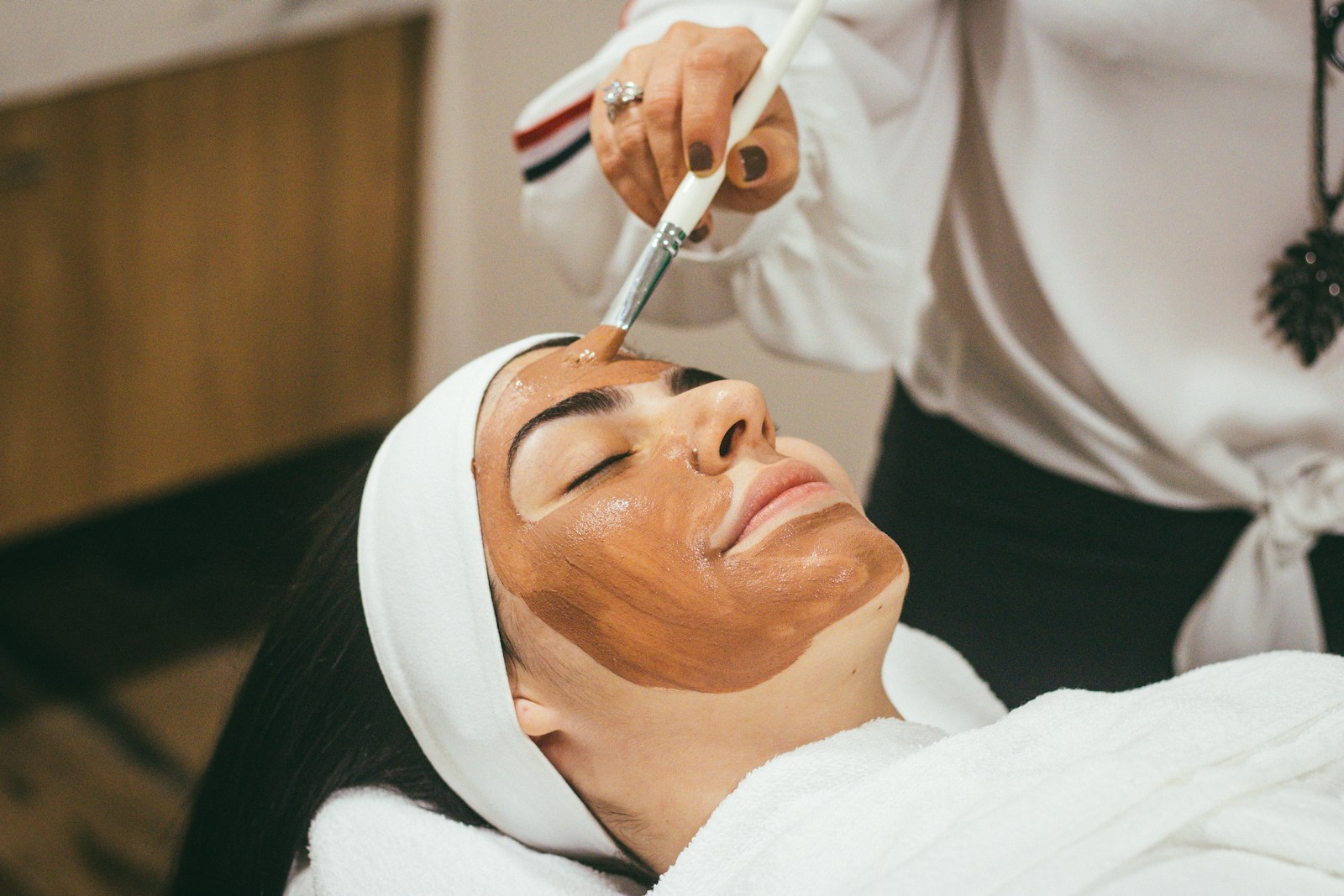
A first pass for skin that is already thin
Before the first pass comes an inventory, descriptive, kept short of a diagnosis you are not making. Stinging on water. Visible vessels. Lipids that seem to vanish by afternoon, which is a water-loss pattern you are inferring with your eyes because you are not running the instrument. Products that were fine last season and now sting. In that state glycolic acid is the acid you leave in the cupboard. Courage is a poor clinical endpoint. The first professional step is a PHA or a succinic acid at a concentration the maker has released for sensitive skin, one layer, a defined time, stopped if stinging persists past the window you named.
Aftercare is the second half of the acid. Treat it as part of the peel, because chemically it is. Immediately afterwards a lipid phase with ceramide, cholesterol and fatty acids. A watery acid toner for freshness is how you undo the hour. Photoprotection the same day, once skin can tolerate it, because freshly exfoliated skin answers UV with pigment faster than the client expects. Retinol stays off the following nights until the tightness is gone. Needling stays out of the same appointment. Stacking is how a gentle acid becomes a story the client tells someone else.
Intervals get longer than the client remembers from earlier clinics, where speed was the luxury. Fourteen days is a defensible start. Seven is a habit imported from a thicker barrier. If after the third visit the lipids are worse, the dose is too high or the aftercare is too thin. You pause. Hydrolipid collapse announces itself the next morning as a tight shine and a flush that was absent at bedtime. Pushing through is how that morning becomes the new baseline.
The supplier line sorts by novelty. The room sorts by size.
professional retail will present succinic acid, PHAs and glycolic in one line, ordered by how recently the story was written. The cabin re-sorts by the molecule. Small molecule, high free acid: only on a stable stratum corneum, with neutralisation and with experience you can name. Large molecule, or a dicarboxylic acid: the standard when visible vessels and barrier damage define the picture. Lactic acid is a small AHA with a soft reputation. Amber glass is a container. Mild is a measurement of free acid, pH and what the lipids do the next day.
The menu then names the substance, the pH, the time and the skin it is meant for. Cellular renewal as a promise, and a cure for redness, stay off the card. The stratum corneum renews itself in about two weeks anyway, on its own clock. An acid shifts the timing and the evenness of that shed. If the lipids are still there afterwards, you have done a contemporary peel. If they are missing, you have done a smaller glycolic under a new name, and the cheek will say so before the caption does.