
The annex grew. The blotter did not get quieter.
Twenty-six fragrance allergens were the old core. The extended EU list, IFRA categories and oxidised terpenes now decide what a cabin may call fragrance-free.
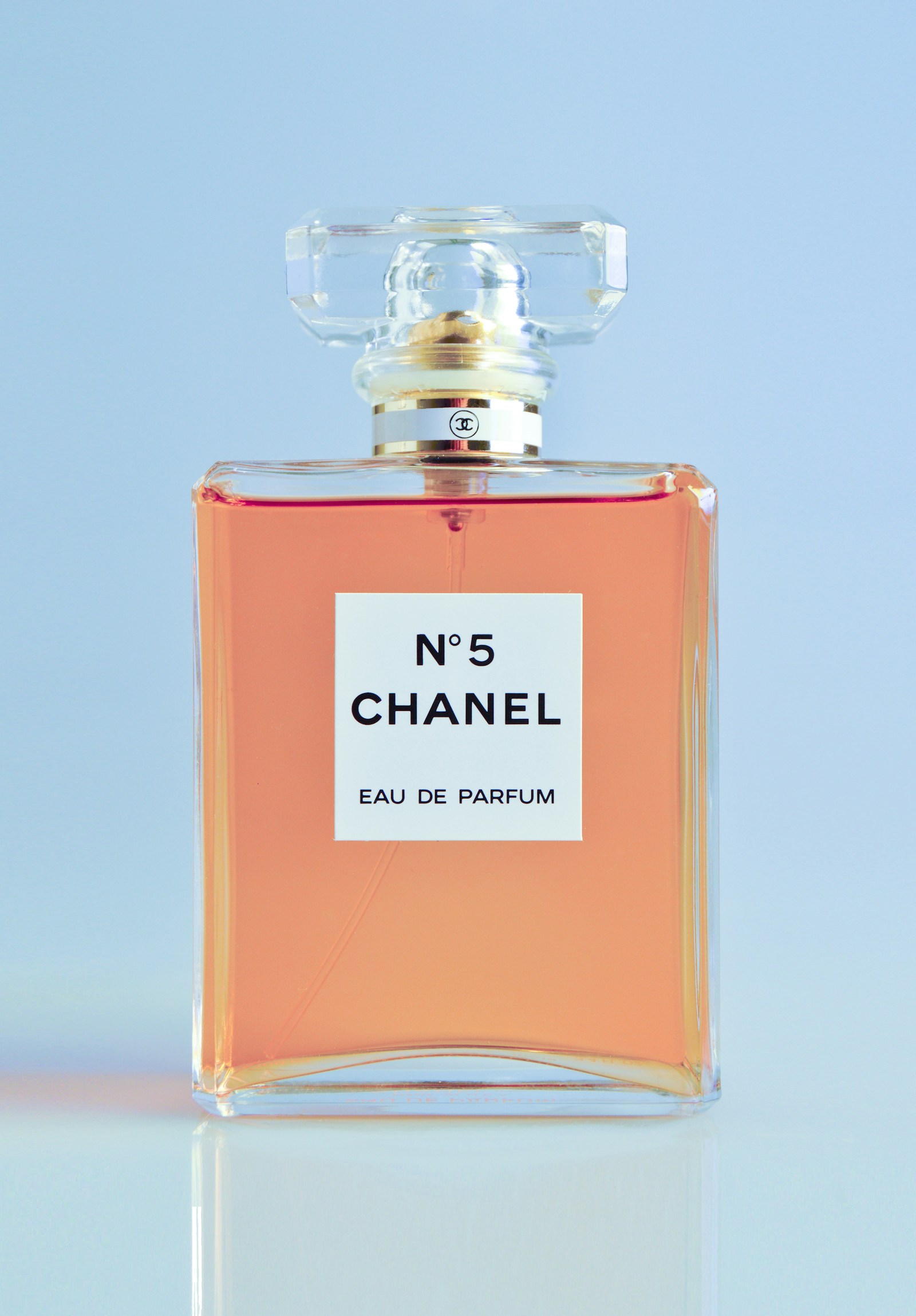
A scent molecule and its allergen line belong on the same sheet, before the blotter is passed. Image credit: Unsplash. Unsplash commercial licence.
The historical 26 fragrance allergens sit in Annex III of Regulation (EC) No 1223/2009. Above 0.001 percent in a leave-on and 0.01 percent in a rinse-off they belong on the label individually, beside the collective word parfum or aroma. Regulation (EU) 2023/1545 enlarged that list, in the industry count to around 80 substances. Since 31 July 2026, products newly placed on the market have had to carry the extended labelling. Goods already on the market before that date have until 31 July 2028. On a late-October desk, fragrance-free is a labelling question and a formula question. The style word has left the building. At industry practice the accords are still sprayed before the annex is opened. The annex is what the cabin will be asked about once the blotter dries.
The 26 remain the core of a larger duty
The classical set holds the molecules a perfumer handles daily: linalool, limonene, citral, geraniol, citronellol, eugenol, cinnamal, coumarin, farnesol, benzyl alcohol, benzyl benzoate, benzyl salicylate, and the extracts Evernia prunastri and Evernia furfuracea, oakmoss and treemoss. Two names from this neighbourhood are now banned in the EU or pushed to trace level: hydroxyisohexyl 3-cyclohexene carboxaldehyde, known as Lyral or HICC, and butylphenyl methylpropional, known as Lilial. Atranol and chloratranol from moss extracts are tightly limited as well. A moss accord that used to smell like a Paris hallway now needs a current limit check before it touches a cream.
The 2023 extension pulls further fragrance substances and additional terpenes into the declaration duty once the thresholds bite. A clinic still working from an allergen list dated 2018 underestimates the label on new batches. The fragrance house has to supply the current breakdown against the concrete use level in the finished product. The concentrate alone is the wrong denominator. A level that looks quiet in the neat oil can cross the threshold once it is dosed into a leave-on. The reverse also happens. The arithmetic is done on the finished product, in the jar the client takes home.
CLP remains relevant for classification of raw materials and for the workplace instruction. The Cosmetics Regulation governs the consumer label. Reading only one of the two builds either a wrong pack or a wrong safety data sheet. Both documents can be beautiful. Only one of them faces the client in the bathroom light.
Synthesis changes the origin. The allergen stays the molecule.
Linalool from lavender, linalool from pinene chemistry and linalool from petrochemical steps are the same allergen once the molecule is present. The synthetic route can change solvent residues, isomer ratio and oxidative stability. It does not strike linalool from Annex III. Natural on the label is a sourcing story. A synthetic accord can sit lower in listed allergens than an essential oil when it simply omits the critical molecules. It can be just as loaded when it sets the same terpenes at a higher dose, because those terpenes are what citrus, rose or lily of the valley smell like. The nose does not grade the route. The annex grades the molecule.
The difference that matters often sits in oxidation. Limonene and linalool form hydroperoxides, and those oxidation products sensitise more strongly than the fresh hydrocarbons. Light, air and an open bottle in the cabin cupboard shift the risk without changing the INCI line. An antioxidant in the fragrance oil, a small pack, cool storage and a realistic period after opening are formulation. They are part of the risk control, as concrete as the percentage on the label.
Moss, spice complexes heavy in cinnamal, and high-dose citrus oils remain the dense allergen packages. A single ester with an IFRA limit can carry one of those ideas in a given accord, with fewer declarable side components. That is a composition decision by the perfumer. It becomes a clinic decision once the house licenses a signature across several leave-on products and the thresholds land differently in cream, oil and toner.
Fragrance-free means no parfum, no aroma, no essential oil, no masking scent. Benzyl alcohol from preservation, and limonene inside a plant extract, still have to be read.

IFRA is a ceiling. The label is a separate page.
The IFRA standards, built on quantitative risk assessment, set maximum levels by product category. A certificate applies to one category. A fragrance that conforms in a rinse-off shower gel can sit over the limit in a leave-on face oil, because the category calculates more tightly. Clinics that pour the same fragrance oil into massage oil, hand cream and a room diffuser leave the basis of the certificate. The diffuser is often outside cosmetics. The massage oil is inside. The staff member who stands in that room for eight hours has an occupational exposure that no consumer label captures. That exposure belongs in the workplace instruction, beside the pretty story about calm.
IFRA does not retire the EU declaration. A substance can sit under the IFRA limit and still be declarable. A fully declared perfume can miss IFRA conformity when the category is wrong. Both belong in the raw-material dossier: amendment status, category, allergen breakdown at the use level, and a clear exclusion of HICC and Lilial. Lower-allergen is a relative term. Fewer listed substances, a lower dose, less tendency to oxidise. Sensitisation remains an individual immune response, so a zero-risk fragrance is a sentence the immunology will not sign. Hypoallergenic is not a defined laboratory proof, under EU law, that a reaction will not occur. A house that uses the claim has to carry it under the regulation on common criteria for cosmetic claims. A client’s allergen record outranks any brand language, including the language printed in a beautiful serif.
An honest fragrance-free rule in the cabin
A workable definition for the clinic has four criteria. No component that would be declared as parfum, fragrance or aroma. No essential oil and no absolute. No fragrance material whose only job is to mask a base. And a check of the remaining INCI against the listed allergens, because benzyl alcohol can be a preservative, limonene can sit inside an extract, and complexes that contain bisabolol bring their own declaration. Four doors. A product that clears three of them is still scented in the way the law counts.
Plant extracts are the usual gap. An extract that smells of nothing can still contain linalool or geraniol at a declarable level once the threshold is crossed. The supplier has to declare the known allergens in the extract, on the same logic as a fragrance breakdown. Printing fragrance-free without asking the extract produces a label. The concept stays unfinished. Buyers at industry practice can ask for that breakdown at the use level in the finished product before the blotter crosses the counter.
Known fragrance allergy belongs in the history, beside the products that stay on the skin. A room scent that never touches the client as a cream can still provoke symptoms. Switch it off. Explaining that the scent is natural answers a question the law does not ask. Natural was never the legal category. Oxidation still needs a pack size, shade from light, an antioxidant and a period after opening, because hydroperoxides do not appear as their own INCI line. The next accord In trade buying will smell expensive. The cabin that can name the category, the finished-product percentage and the fragrance-free alternative already has the quieter product, even when the blotter is the thing people remember.