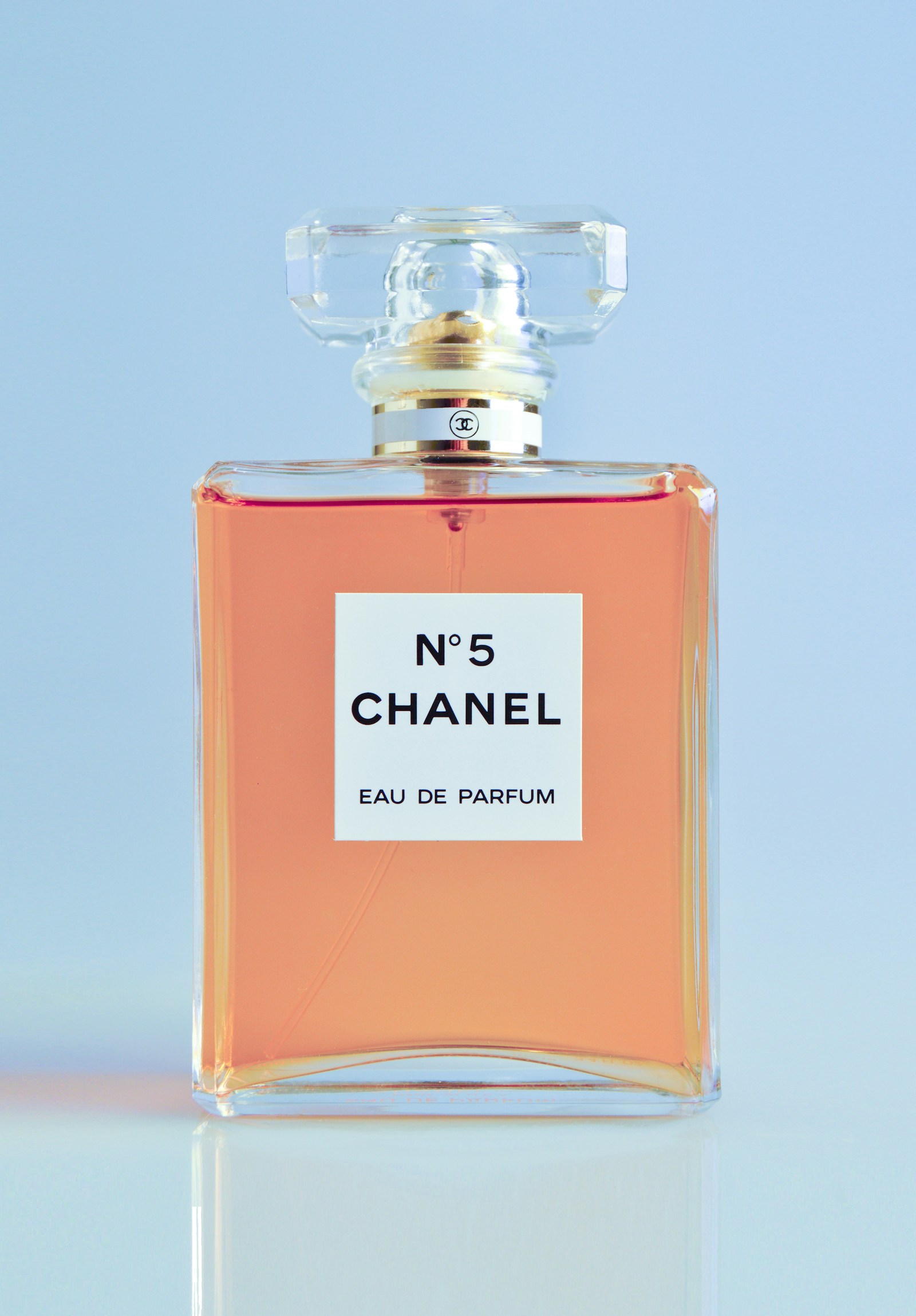
Entry 78, and the glitter still sitting by the lamp
The REACH restriction on synthetic polymer microparticles is already in force. Rinse-off, leave-on and makeup run on different clocks, and the texture changes when the particle leaves.

Polymer particles in a peel or a glitter pot are a regulation with a texture attached. Image credit: Unsplash. Unsplash commercial licence.
Since 17 October 2023 the REACH restriction on synthetic polymer microparticles has been in force, set down in Regulation (EU) 2023/2055 as entry 78 of Annex XVII. By autumn 2026 this is daily purchasing, not a rumour from Brussels. Loose glitter and peel microbeads are already out. For many other rinse-off formulas the clock runs to 17 October 2027. Leave-on follows in 2029. Decorative lip, nail and makeup products wait until 2035, with a labelling duty from 2031. Clinics that still buy on the words microplastic-free, without checking the particle definition, reformulate early in the wrong place or late in the expensive one. At industry practice the claim is already on the header cards. Entry 78 is less photogenic. It is the document that decides which jar stays on the trolley.
What the definition actually catches
A synthetic polymer microparticle, in the sense of the restriction, is solid. It is present as particles, or as a continuous coating on particles, and it meets the size criteria: all dimensions up to 5 millimetres, or, for fibres, a length up to 15 millimetres with a length-to-diameter ratio above 3. At least 1 percent of the particles must sit in that window, and the polymer must make up at least 1 percent of the particle. The concentration in the mixture from which placing on the market is restricted is 0.01 percent. Those thresholds sound small on a slide. On a formula sheet they catch more trade names than the word bead ever did.
Three derogations carry the practical work. Degradable polymers pass only along the test paths in the annex to the restriction, not under an arbitrary leaf. Water-soluble polymers have to clear the solubility threshold set there. Natural polymers that have not been chemically modified can pass through the last door. Cellulose can. Cellulose acetate, as a rule, cannot. Starch can. A chemically modified starch needs its own classification. A brochure sentence will not do it.
Film formers dissolved in the formula, no longer solid particles, do not fall under the same provision as a polyethylene bead. The same polymer family as a powder, an opacifier or a glitter does. Swellable bodies and microgels are not something a clinic should declare soluble on its own authority. The supplier statement has to refer to entry 78, with particle status, solubility and, where degradation is claimed, the concrete test. Ask for the product code on the same page. Trade names wander.
Deadlines that steer purchasing in 2026
Microbeads for peeling, and loose glitter sold as such, have been restricted since October 2023. A studio that still keeps a jar of PET glitter beside the nail lamp has a current problem. Glitter already inside a nail or makeup product may, depending on composition, sit inside the long deadline for nail, lip and makeup. That long clock leaves the later labelling in place, and it leaves the need to know the formula now. Waiting until 2034 to open the INCI is how a backbar becomes a surprise.
Other rinse-off cosmetics, much of what leaves the skin after washing and is not a classic microbead, face 17 October 2027. From a late-2026 desk that is inside a year. Leave-on care follows on 17 October 2029. Fragrance encapsulates sit in that later window and still deserve their own raw-material passport, because the capsule is often exactly a solid synthetic polymer. Makeup, lip and nail have until 17 October 2035, and from 17 October 2031 they must say so when they still fall under the definition.
Supply-chain information duties and notifications toward ECHA sit alongside the bans. A cabin brand or a private-label line needs an owner for these dates. An annual check in the quality calendar beats a panic eight weeks before the deadline. Reformulation itself needs stability, sensory work and often new packaging. That does not fit in a quarter when three suppliers are chasing the same replacements at once. Professional use is not a waiver. A industry practice buyer who accepts the line that salon-only means the ban waits has accepted a sentence entry 78 does not contain.
The expensive surprise is the polymer particle still running under another trade name as soft-focus, glitter or capsule.
What the texture costs when the particle goes
Polyethylene and polypropylene beads, nylon-12 powder, PMMA spheres, PET glitter and some acrylate or polyurethane particles are the usual hits. They deliver scrub, soft focus, slip or a hard point of shine. Replacement is feasible. The hand feels the difference on the first pass, which is the honest part of the reformulation.
For peels, formulators take hydrogenated plant waxes, silica, cellulose, salt, sugar or ground kernels. Waxes spread milder than polyethylene and melt on the skin. Kernels and coarse silica scratch harder when the particle-size distribution is poor. Salt dissolves. The experience ends in the water, which is what the regulation wants. The client who knows the old scrub notices at the first use. She does not notice it in the INCI, which is why the treatment language has to change with the jar.
Soft focus without nylon runs through silica, starch and an adjusted pigment distribution. The blur goes flatter or patchier when particle size is off. Film formers in mascara and sunscreen often remain permitted as long as they are not solid microparticles in the mixture as sold. Once a dispersion dries and leaves crumbly polymer fragments, the raw material is reassessed. Striking every acrylate copolymer on principle wrecks texture and can still miss entry 78. Biodegradable on the carton is a mood. The test has to match the annex. A polymer that vanishes in a compost advertisement and fails the legal path remains a synthetic polymer microparticle. Running that material into the 2027 deadline means reformulating twice, and paying for both sensory panels.
An operating rhythm for clinic and private label
Start with a raw-material inventory. Every polymer position, every glitter, every capsule, every powder. The supplier provides a statement on particle character, solubility, natural status and degradation, dated, with a product code. Trade names without a chemical identity go on a hold list until the document arrives. Then assign the deadline class: already restricted, 2027, 2029, or 2035 with a label from 2031. Cabin goods that the clinic fills itself carry the same duty as the brand on the shelf.
Sensory work happens in the same place in the routine, with the same client. A body peel that is milder needs different language in the treatment. A face product that scratches is a failed swap, however correct the annex looks. Margin suffers when the replacements cost more and the fill weight stays the same. That belongs in the calculation before the claim is printed. Loose glitter in the studio is a present issue, separate from the long transition some nail lacquers still have. The header card at The next supplier line will stay prettier than entry 78. The trolley that leaves with a dated supplier statement will already know which powder was a particle and which film former was only a polymer in solution.